Insight 4 min read
Innovate today, nourish tomorrow: what it looks like in my work
FAO’s World Food Day theme for 2026 pairs new ideas with traditional knowledge. In my work, that means protein in foods people already eat, and Lebanese heritage rebuilt.
In 30 seconds
- World Food Day is 16 October. FAO’s theme for 2026: “Innovate today. Nourish tomorrow.”
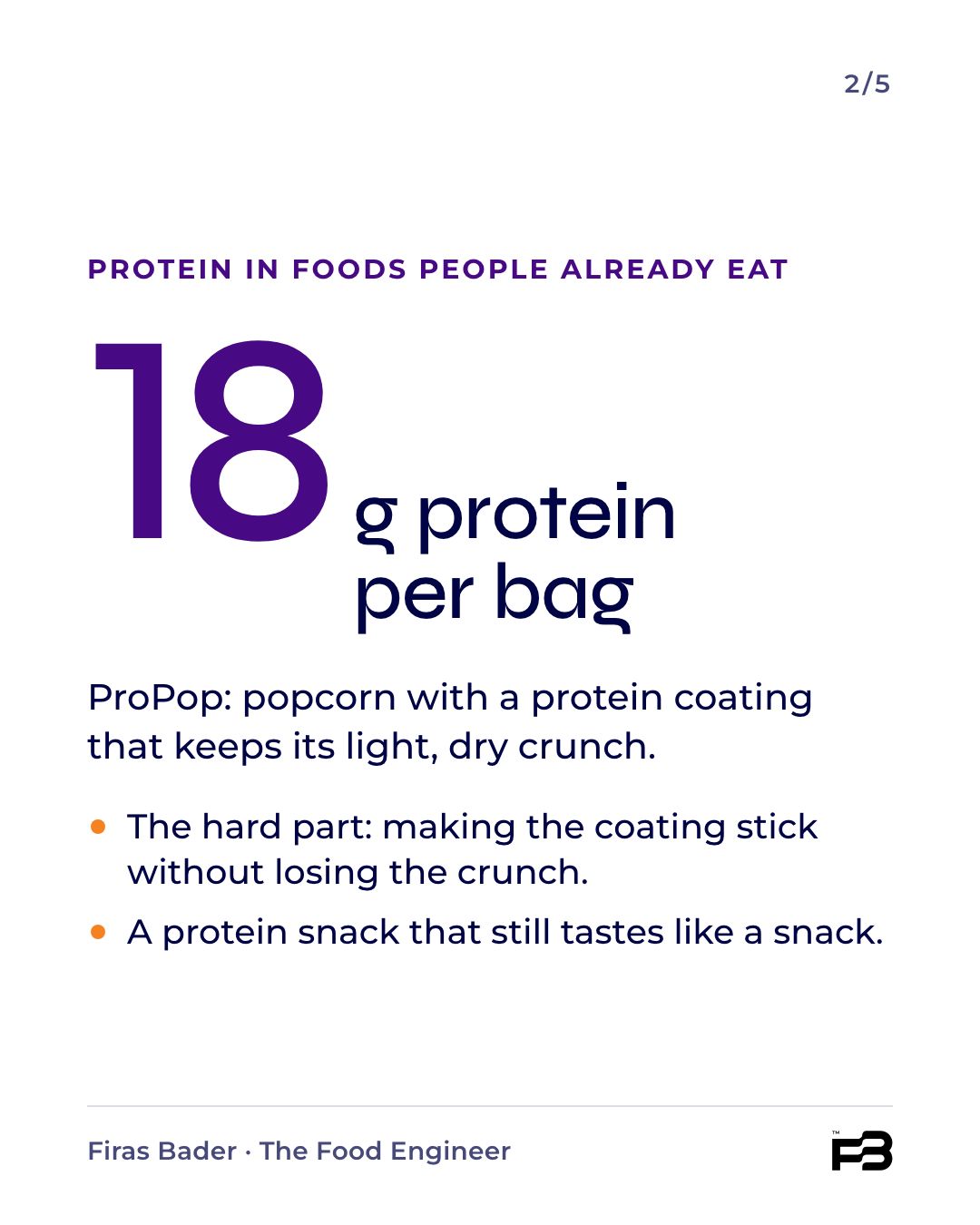
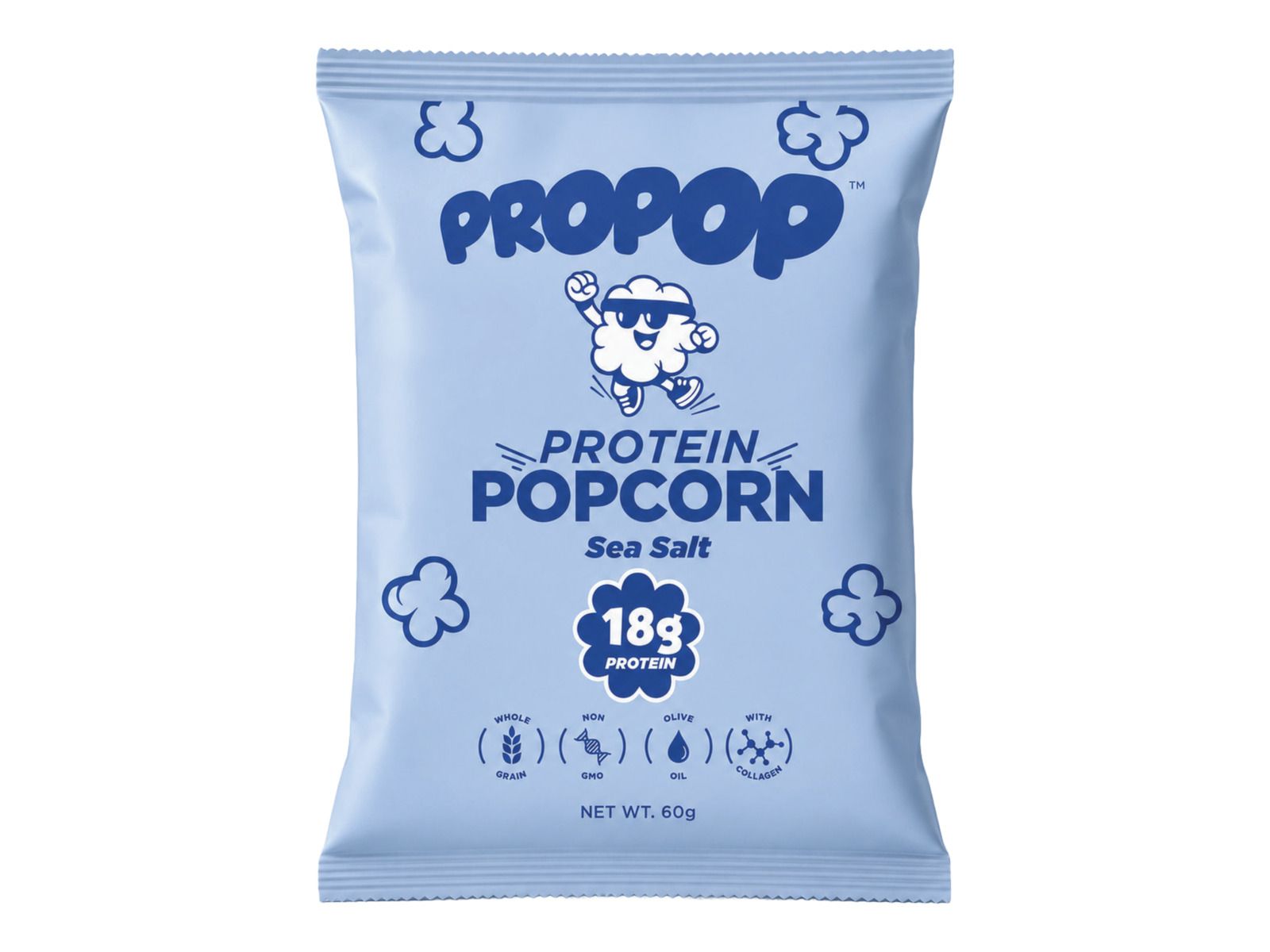
- For ProPop, I developed a protein coating for popcorn that keeps its light, dry crunch: 18 g protein per bag.
- In my own lab: carob and debs protein products and a high-protein halawi, both in development.
16 October is World Food Day, and FAO’s theme for 2026 is “Innovate today. Nourish tomorrow.”
It’s an easy line to agree with. In food, though, innovation counts when people choose to eat it again. A protein bar nobody finishes nourishes nobody.
FAO pairs “forward-thinking solutions” with “traditional knowledge”. That is a good brief for a food engineer: new tools, applied to foods people already love.
In my work, it shows up in two ways: protein in foods people already eat, and Lebanese heritage foods rebuilt with better nutrition.
Protein in foods people already eat #
My view is simple: a protein snack has to win as a snack first. If it doesn’t, the protein never gets eaten.
For ProPop, I developed a protein coating for popcorn that keeps a light, dry crunch, with 18 g of protein per bag. I was the lead formulator and process engineer.
The hard part was making the coating stick without losing that crunch. Popcorn is mostly air inside a thin, crisp shell. A coating heavy enough to carry real protein adds weight, and protein powders can pull in moisture, which is what turns crunch into chew.
The approach: whey isolate and collagen carried in an oil-based coating. The solution: a finely milled oil-and-protein coating, tumble-coated onto the popcorn, then finished with a dry protein dusting.
A formula is only half the job. I also wrote ProPop’s factory SOP, delivered ready for scale-up: the factory side of the project.
Heritage, re-engineered #
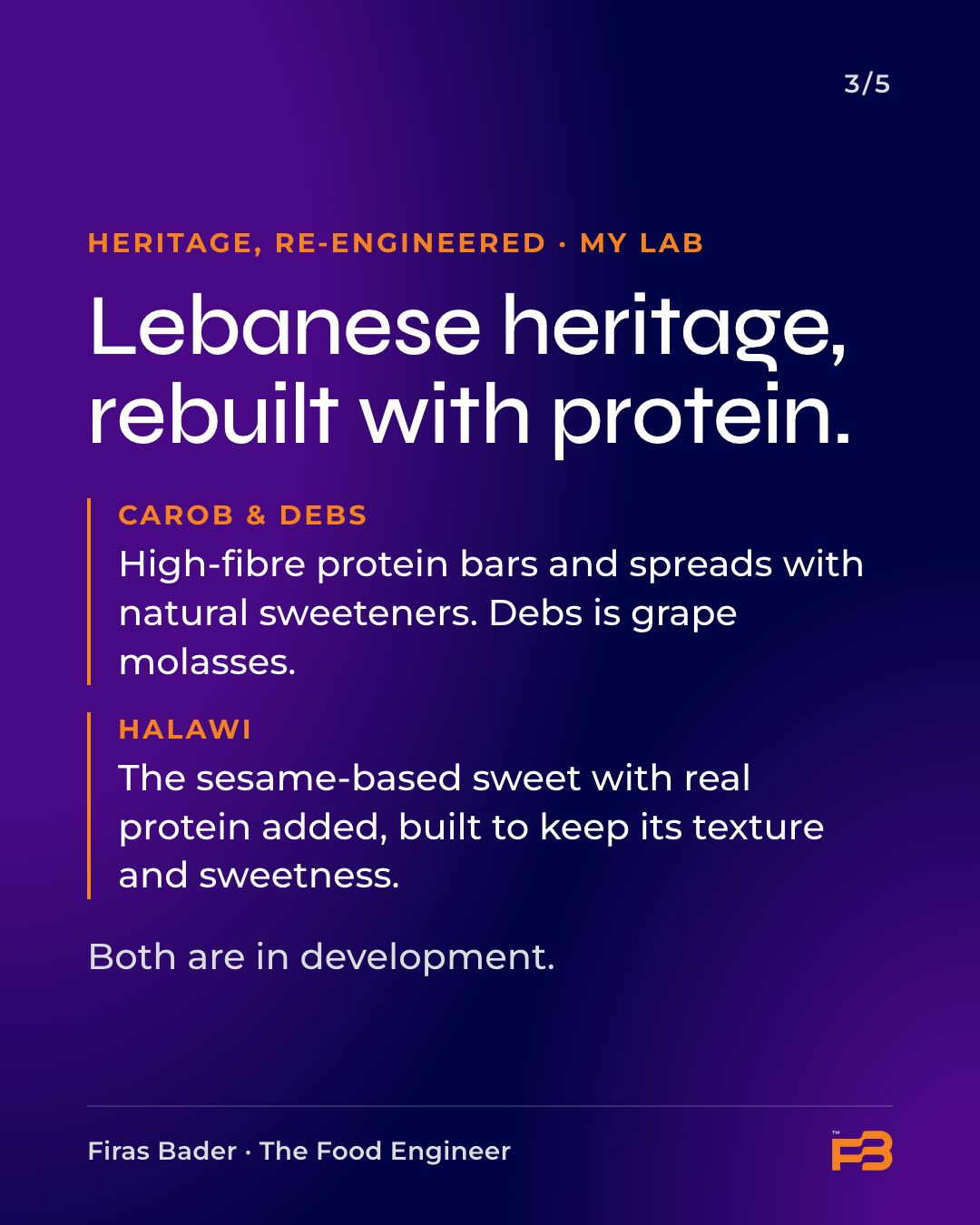
The second way is closer to home. In my own lab, I’m developing protein bars and spreads built on carob and Lebanese debs (grape molasses), with natural sweeteners and added fibre.
Carob has a naturally sweet, cocoa-like taste, and debs is grape juice cooked down into a thick, dark syrup. Both have been part of Lebanese kitchens for generations.
The challenge is to turn these two heritage ingredients into a high-fibre protein product with its own identity. The approach pairs natural sweetener systems with high-fibre protein bases.
Halawi, with real protein #
My other heritage project is halawi, the sesame-based Lebanese sweet, with real protein added. It’s built to keep its texture, sweetness and character. The challenge: add significant protein without changing that authentic texture and sweetness.
Halawi is built on tahini, and its texture is the point: dense, then flaky as it breaks. Protein powders tend to soak up oil and water, so they can leave a sweet like this firmer or drier.
Both are still in development. No launch and no shelf yet, just the work.
One test for all of them #
Popcorn, carob bars, halawi: the test is the same for all of them. Add the nutrition, keep the food people love.
In practice, write both down before the first trial: the one thing people love about the food, and the nutrition goal. Then judge every trial on both, so a version that hits the protein number but loses the crunch, the flake or the sweetness never makes it through.
Try the test on a food you love
Ticks are saved on this device only.
Start with what people would miss #
If you make a traditional product, start by naming the one thing people would notice first if it changed, and protect it. Then build the nutrition around it, one trial at a time.
Have a heritage food you’d like to make better-for-you? I’d love to hear which one. Tell me about it.
Sources
Every number here comes from these sources. Read them before you rely on a figure.
- FAO: World Food Day 2026, “Innovate today. Nourish tomorrow.” (opens in a new tab) ·
- Case study: ProPop protein-coated popcorn (opens in a new tab) ·
- Case study: ProPop factory process and oxidation control (opens in a new tab) ·
- Case study: Carob and debs products (innovation lab) (opens in a new tab) ·
- Case study: High-protein halawi (innovation lab) (opens in a new tab) ·
Your turn
Which traditional food would you love to see made better-for-you?
Vote, then see what other readers chose.
Discuss this with Firas
Facing this in your own product? Send me a line on WhatsApp, or tell me about it on the contact page.
Projects behind this article
ProPop · Snack
Protein‑coated popcorn
Make a protein coating stick without losing the crunch.
Light, dry crunch Status: Formula delivered
Innovation lab · Heritage × functional
Carob and debs products
Turn two Lebanese heritage ingredients into a high-fibre protein product with its own identity.
High-fibre Status: In development
Innovation lab · Lebanese heritage × nutrition
High‑protein halawi
Add significant protein without changing the authentic texture and sweetness.
Tahini base Status: In development