Insight 5 min read
High protein, still soft: keeping a 20 g protein bar chewy
Why protein bars harden on the shelf, how a client’s 20 g bar was built to stay chewy to its last day, and the three checks I’d make before any launch.
In 30 seconds
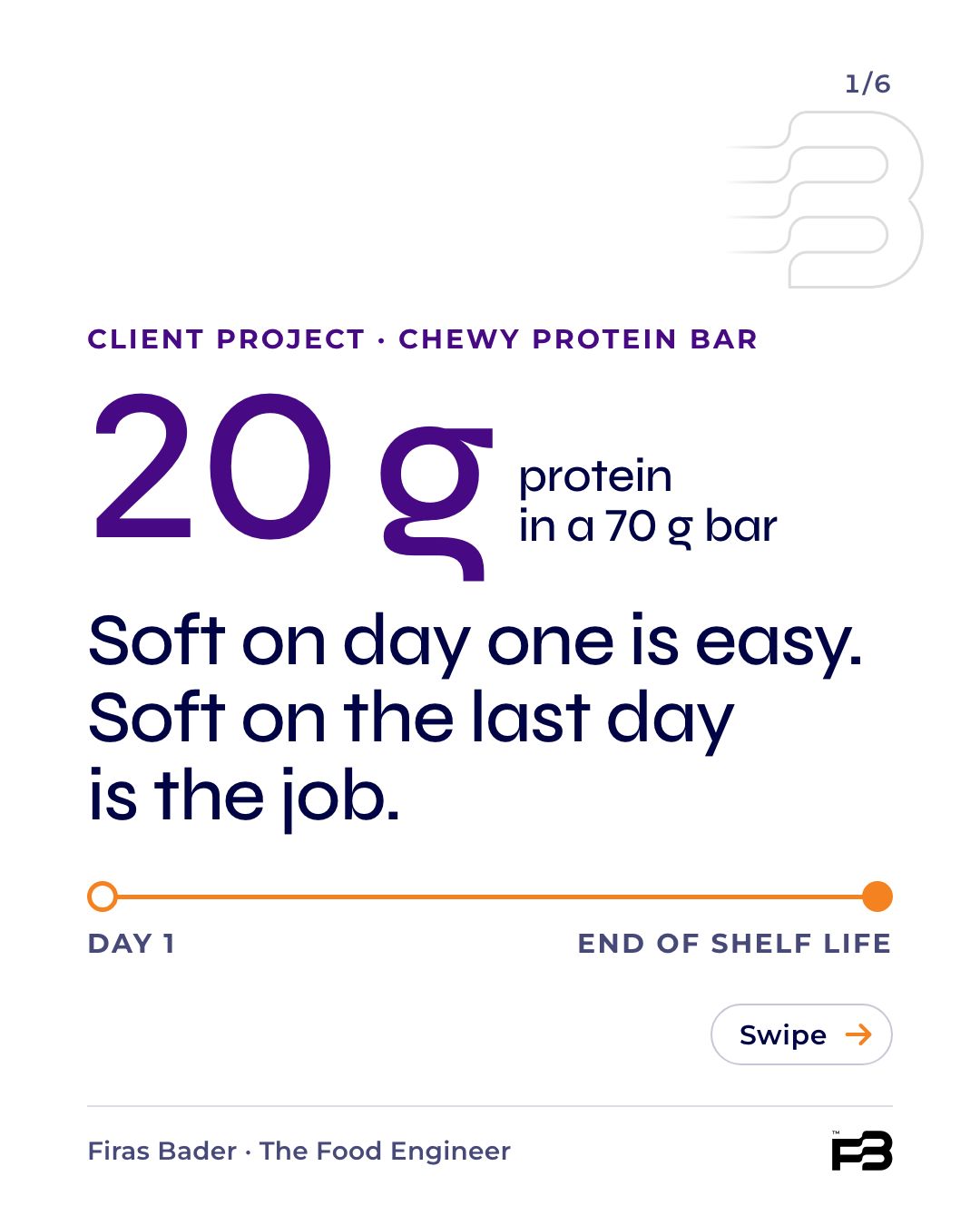
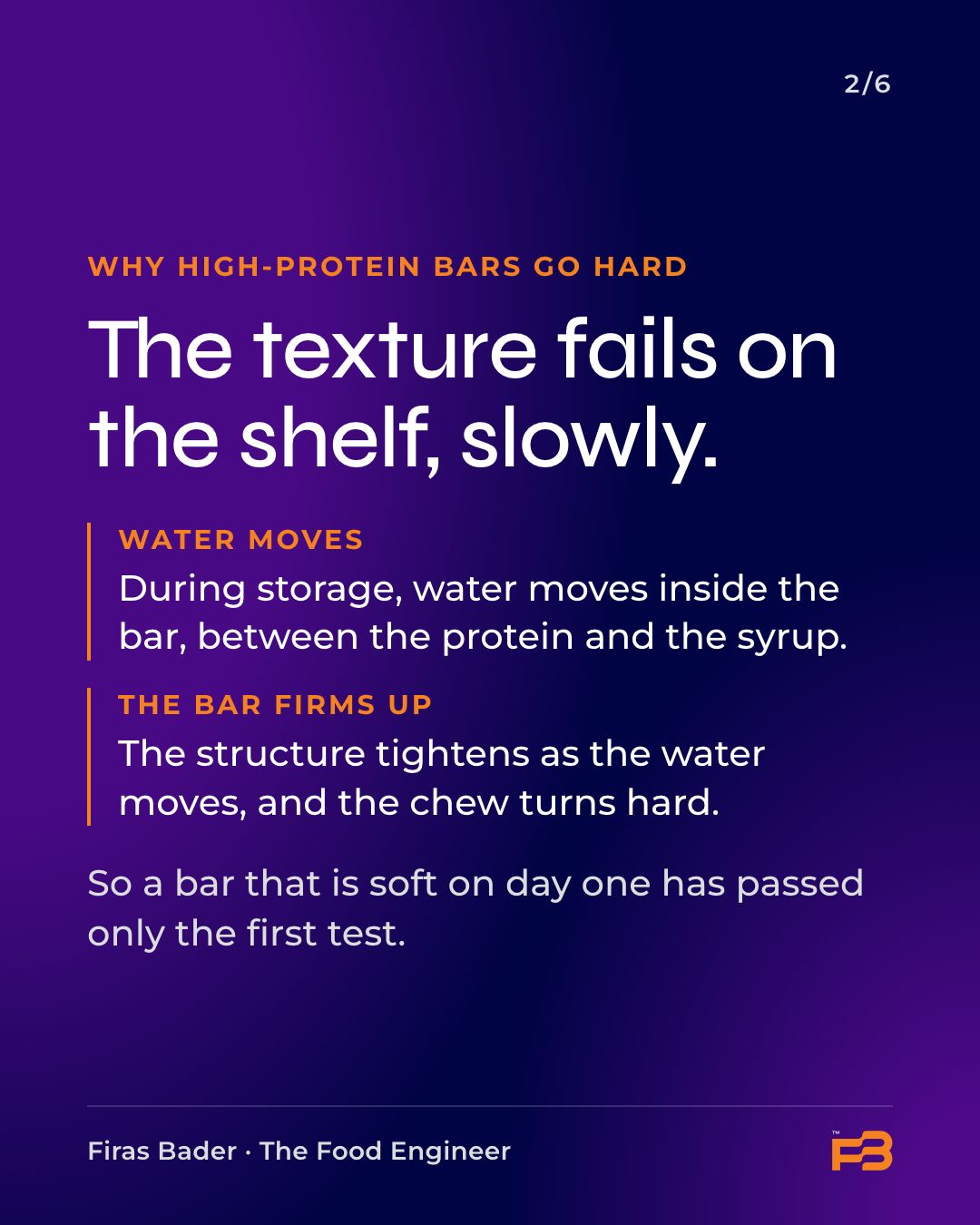
- The brief from a client: 20 g of protein in a 70 g chewy bar that stays soft for its whole shelf life.
- Protein bars harden slowly in storage as water moves inside them. In one lab study, a model bar got about 10× firmer in 50 days.
- The chew was held with two levers set together: the protein system and the moisture balance.
A chewy protein bar is at its softest on the day it is made. The tasting goes well, the photos look good, and the wrapper says 20 g protein. Then the bar sits in a warehouse, on a truck and on a shelf for weeks or months.
By the time someone opens it, the chew can be gone. The bar bends less, snaps more, and turns into the one you leave half-eaten in your bag.
That was the risk on one of my client projects: 20 g of protein in a 70 g chewy bar, soft on its last day as well as its first. Here is what makes that hard, and the checks I’d make on any protein bar before it launches.
Writing “20 g protein” on a wrapper is easy. Keeping that bar soft until its last day on the shelf is the hard part.
The brief asked for three things at once #
The format is a chewy nougat with peanut pieces under a maltitol milk chocolate layer, built on the layered format of popular chewy protein bars. The client stays confidential.
Do the arithmetic and almost 30% of the bar is protein (20 ÷ 70 = 28.6%). That is a lot of dry protein to hide inside something that should feel soft and a little stretchy.
-
20 g in 70 g
Protein in the client’s chewy bar
Source: Case page: chewy layered protein bar (firasbader.com)
-
≈ 29%
Share of the bar that is protein (20 ÷ 70)
Source: Arithmetic from the case page
-
≈ 10×
How much firmer a lab model protein bar got in 50 days at 20 °C
Source: Loveday et al., Food Research International, 2009 (a model bar, not the client’s)
Protein bars go hard slowly, on the shelf #
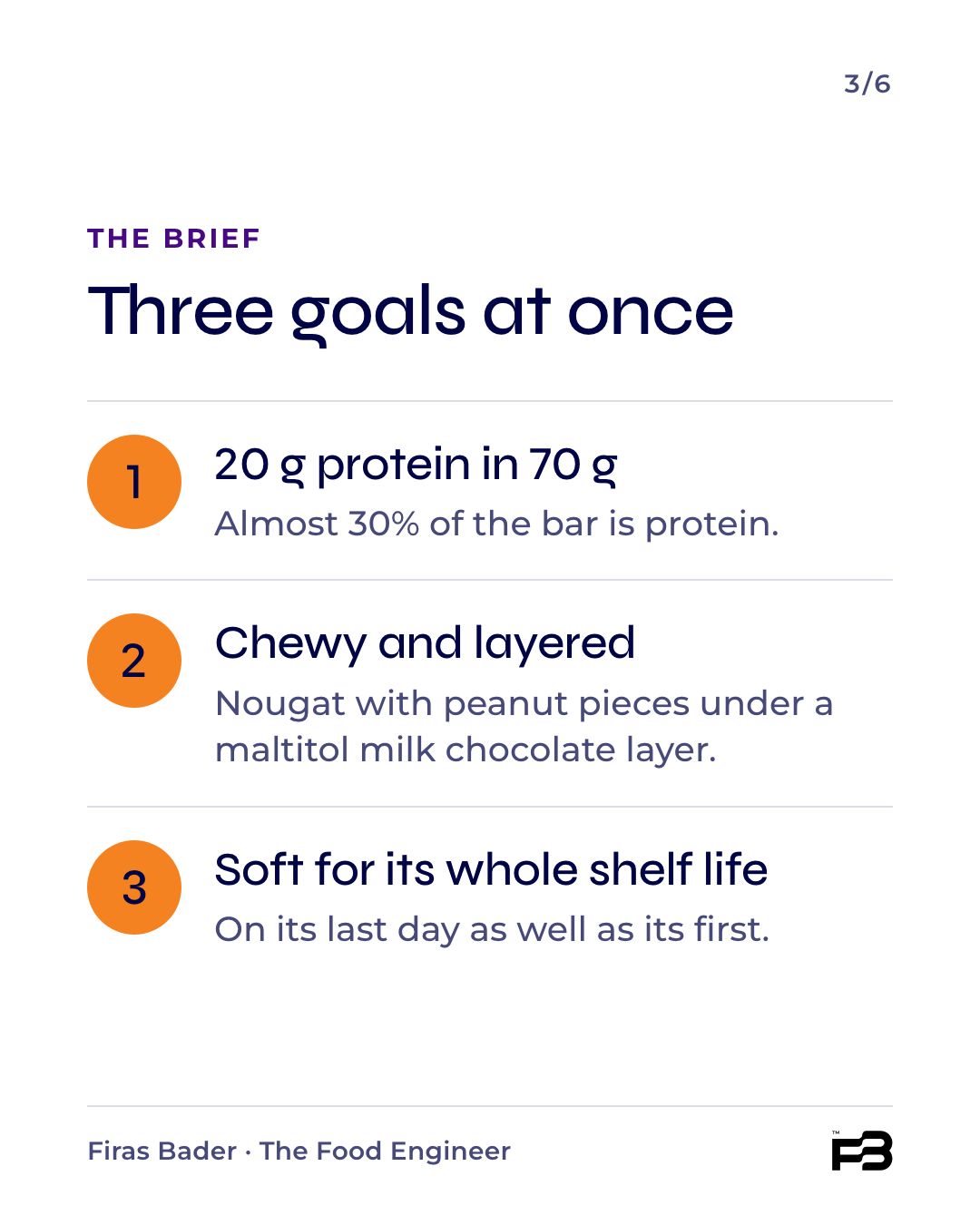
A protein bar is a crowded place: a lot of protein, syrups and other sugars or polyols, some fat, and very little water. During storage, that small amount of water keeps moving. It travels between the protein and the syrup.
As the water moves, the structure tightens. The chew turns firm, then hard. Nothing looks wrong on day one, which is exactly why the problem is easy to miss in development.
A lab study on a model protein bar shows how big the change can be. Stored for 50 days at 20 °C, the bar became about ten times firmer. The authors found that chemical changes were small after the first days, and concluded that water moving through the bar, and the structure changing with it, may matter more than chemistry.
Scroll the table sideways to see every column.
| When | What the study saw | What it means for your bar |
|---|---|---|
| First 5–10 days | The soft batter set into a solid bar. | Some early firming is expected. Judge the texture after this setting phase as well as straight off the line. |
| After setting, to day 50 | Firmness kept rising while chemical changes stayed small. | The evidence points at water and structure, so that is where the fix has to sit. |
| Day 50 | About ten times firmer than at the start. | A bar that is soft on day one has passed only the first test. |
Source: Loveday, Hindmarsh, Creamer & Singh, “Physicochemical changes in a model protein bar during storage”, Food Research International 42(7), 2009
Two levers, set together #
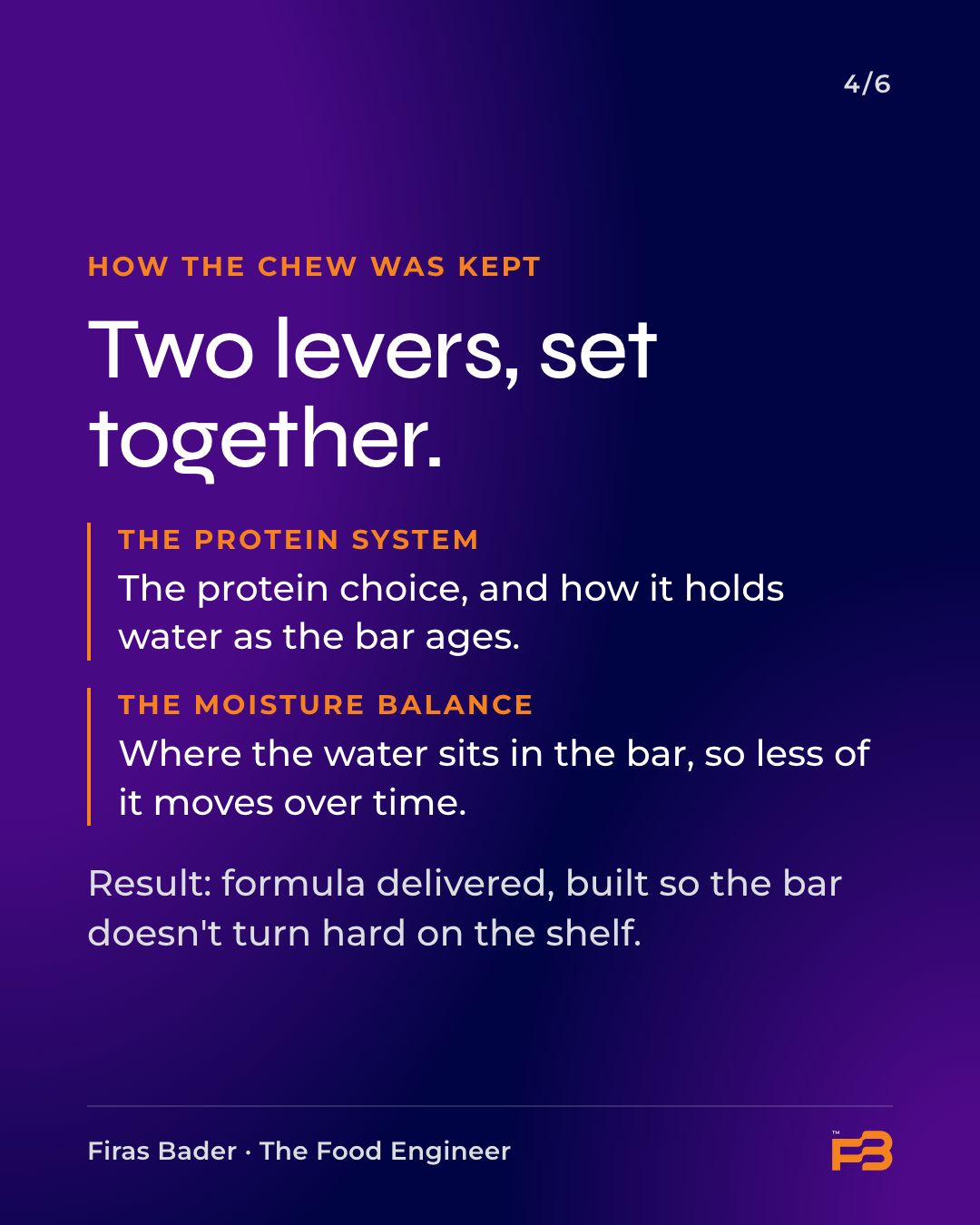
On this project, the chew was controlled through two things at once: the protein system and the moisture balance. The formula was delivered, built so the bar doesn’t turn hard on the shelf.
In plain words, the protein system is the choice of protein, and how it holds water as the bar ages. The moisture balance is where the water sits in the bar, so less of it moves over time.
Why both? Change only the protein and the water can still wander. Fix only the water and a protein that tightens with age can still harden the chew.
They work as one system, so I design them as one. The exact formula stays with the client.
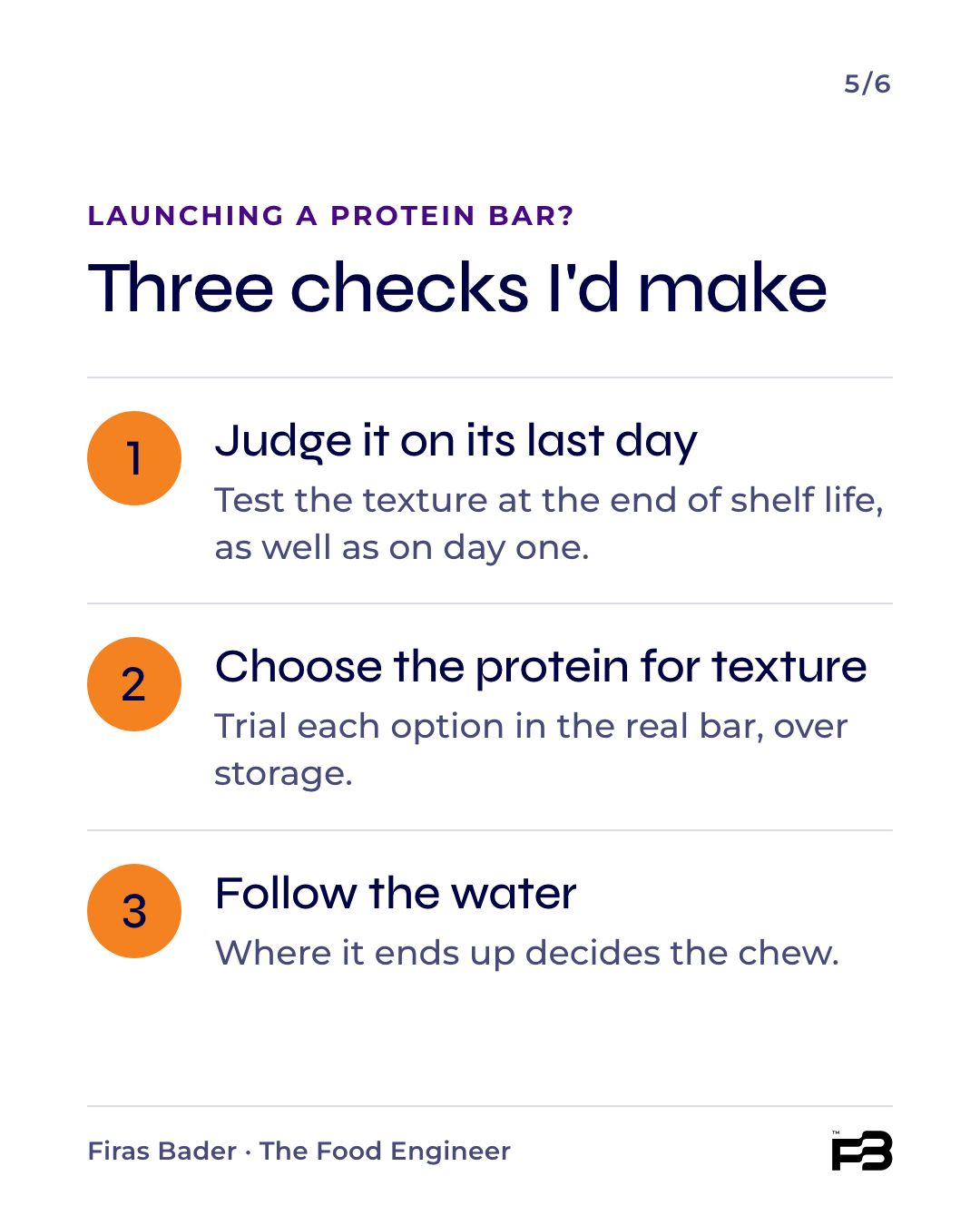
Three checks I’d make before launching any protein bar #
-
Judge it on its last day
Test the texture at the end of shelf life, as well as on day one. Keep samples from the first real batch and taste them on the date printed on the pack.
-
Choose the protein for texture
Two proteins with the same grams on the label can age very differently in a bar. Trial each option in the real bar, over storage, before you decide.
-
Follow the water
Where the water ends up decides the chew. Ask where it sits on day one, and where it will try to go over the following months.
Before you sign off a protein bar
Ticks are saved on this device only.
The one tasting I’d do this week #
If you already sell a protein bar, buy a few from the shelf close to their date and eat them side by side with a fresh one. That one tasting shows you where your bar really stands.
If you are developing a high-protein product and the texture keeps drifting, tell me what you’re working on. I’m happy to compare notes. The project write-up is here: chewy layered protein bar.
Sources
Every number here comes from these sources. Read them before you rely on a figure.
Your turn
What was wrong with the last high-protein product you couldn’t finish?
Vote, then see what other readers chose.
Discuss this with Firas
Facing this in your own product? Send me a line on WhatsApp, or tell me about it on the contact page.
Projects behind this article
Confidential · Sports nutrition
Chewy layered protein bar
Keep the bar soft and chewy for its whole shelf life.
20 g protein in 70 g Status: Formula delivered
ProPop · Snack
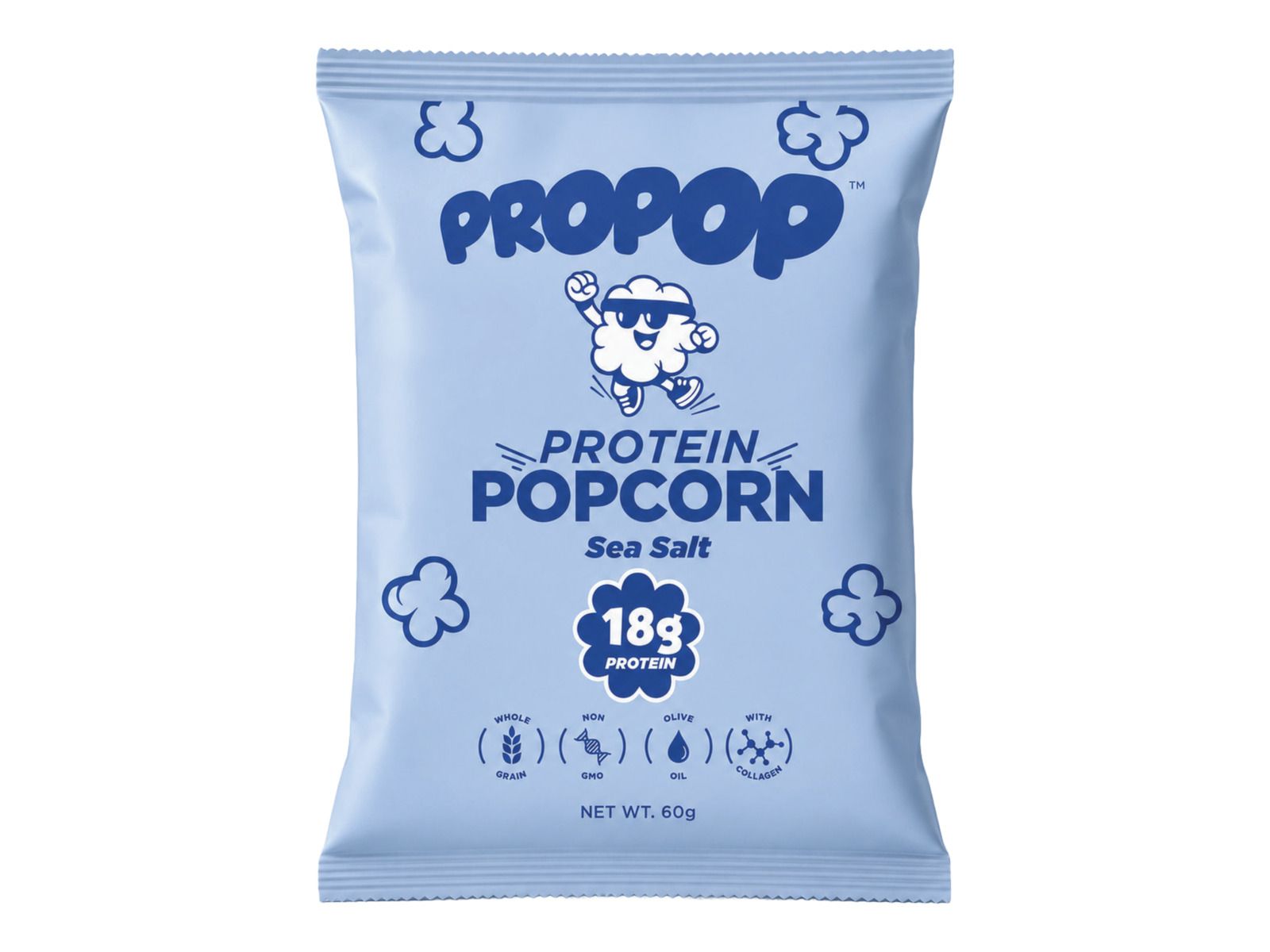
Protein‑coated popcorn
Make a protein coating stick without losing the crunch.
Light, dry crunch Status: Formula delivered