Insight 4 min read
A cake that rose to 8 cm, then sank: find the cause first
A client’s retail cake mix lost a quarter of its height as it cooled. The fix touched three systems, and it started with one measurement.
In 30 seconds
- The symptom showed up last: the cake sank as it cooled.
- The cause was there first: measured before any change, the batter held far too little air.
- The fix reworked three systems and designed the milk allergen out, built to an 18-month shelf-life target.
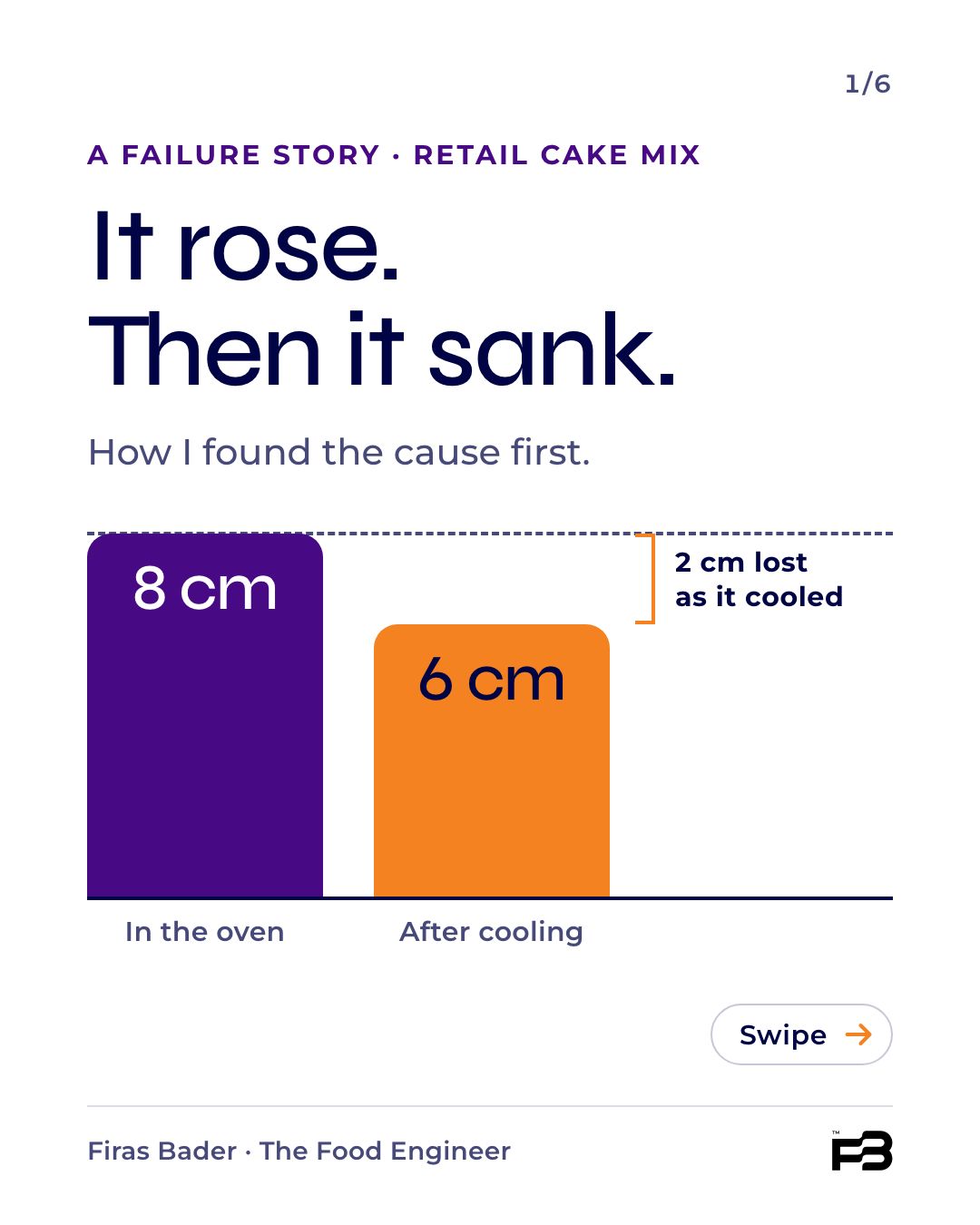
A client’s retail cake mix rose to 8 cm in the oven. Then, as it cooled, it sank to 6 cm. A quarter of its height, gone.
For a home baker, a sunken cake is a bad afternoon. For a brand that sells the mix, it’s a product problem with its name on the box.
When a product fails, the tempting move is to start swapping ingredients: more leavening, another flour, another supplier. On this project, my first job was finding the cause.
Step 1: measure before you change anything #
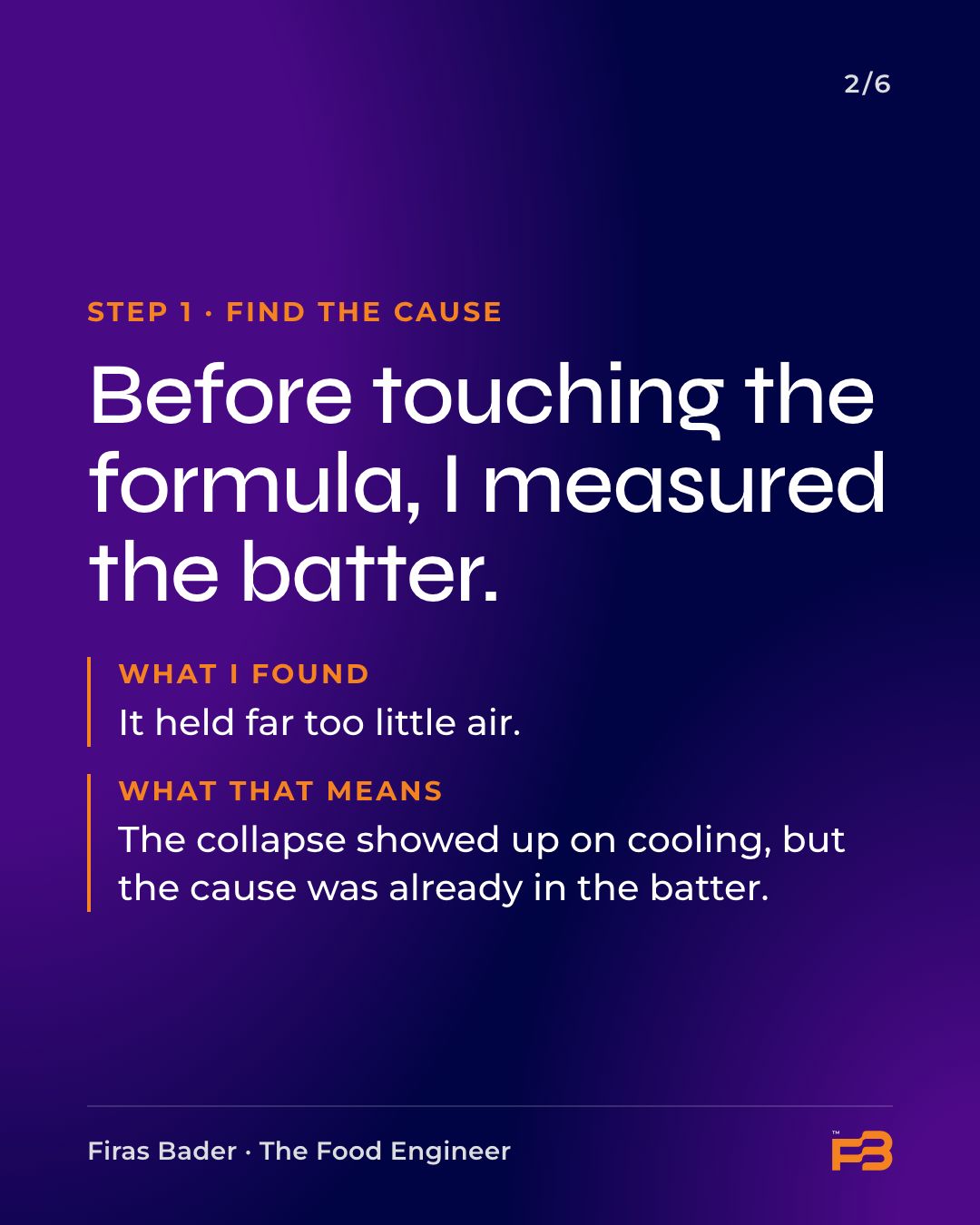
Before touching the formula, I measured the batter. It held far too little air.
That one finding changed the story. The collapse showed up on cooling, but the cause was already in the batter, before the cake went anywhere near the oven.
Here’s why the batter matters so much. In a cake, much of the final structure is set up before baking: how much air the batter holds, and how fine and even those bubbles are.
The oven expands what’s already there. It can’t add what’s missing.
Why does a weak cake fail as it cools rather than in the oven? In the oven, expanding gas and steam hold it up. As it cools, the gas contracts and the steam condenses, and a crumb that hasn’t set firmly around its bubbles pulls in and sinks.
You don’t need a lab to see the idea at work. Fill the same cup with batter from a good batch and from a failing one, and weigh both: the batter holding more air is the lighter cup. The difference shows up before anything goes in the oven.
-
25%
Of the cake’s height, lost as it cooled
Source: Arithmetic on the case figures: 2 cm of 8 cm
-
18 months
Shelf-life target for the reformulated mix
Source: Case: cake mix optimisation
Step 2: one cause, three systems #
Finding one cause doesn’t mean the fix is one ingredient. Here the fix touched three systems: the emulsifier system, the leavening acid and the fat-to-starch balance.
What changed in each one stays with the client: the formula is theirs. In general terms, though, here is what each of them does in a cake.
Emulsifiers help a batter take in air and keep the bubbles stable. The leavening acid decides when the gas is released, during mixing or later in the oven. The balance of fat and starch shapes how the crumb sets as it bakes and cools.
The three lean on each other, so a change in one often calls for a change in another. That is why one cause can still lead to a fix in several places.
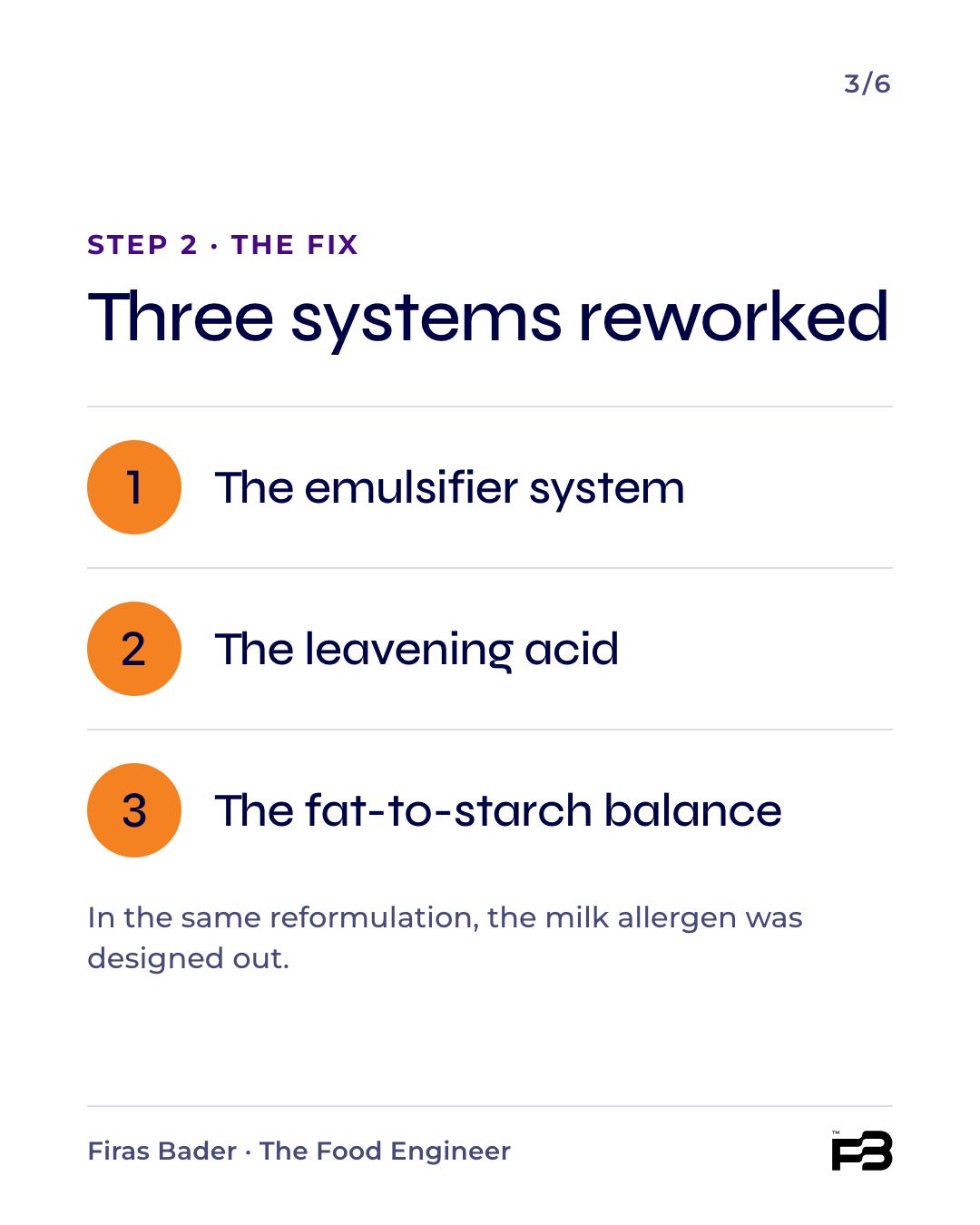
In the same reformulation, I designed the milk allergen out. For the brand, that can mean one allergen fewer on the label, and a mix more households can use.
When a formula is open on the bench anyway, it’s a good moment to fix the other things on the list.
The result: no collapse, built for 18 months #
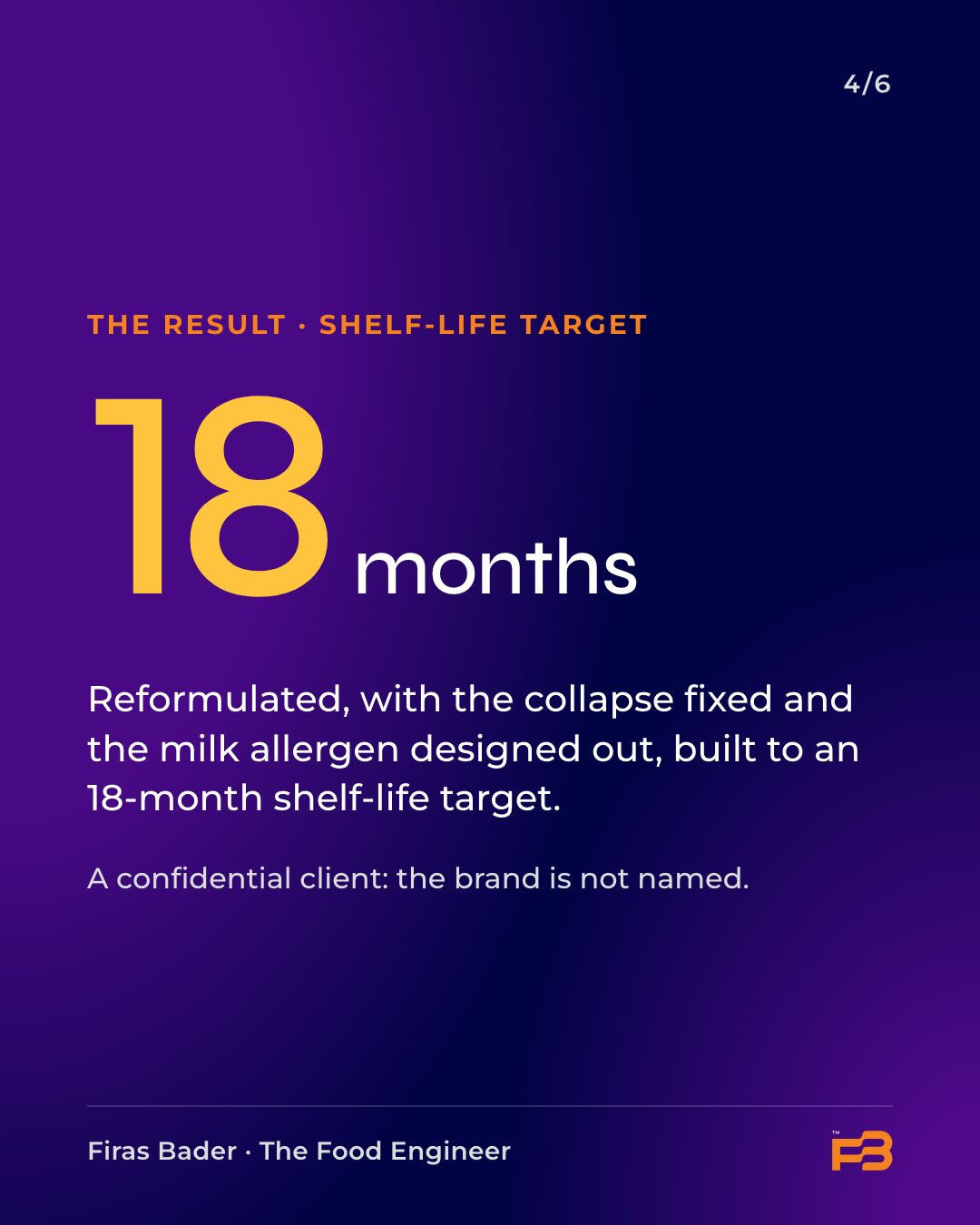
The reformulated mix no longer collapses, and it is built to an 18-month shelf-life target. A dry mix sits in cupboards for months, so the formula has to hold over time as well as on the day it’s baked.
The lesson #
Find the one cause first. The fix may still touch several systems.
Both halves matter. Skip the first and you can run round after round of trials around a cause nobody measured. Forget the second and you can fix the symptom while something else breaks.
Before you change a failing formula
Ticks are saved on this device only.
Where I’d start #
When nobody is sure why a product fails, start with the timeline. Write down when the failure shows up, then measure one step before it. In this cake, that step was the batter.
If a product fails and you don’t know why, happy to take a look. Tell me what’s happening.
Sources
Every number here comes from these sources. Read them before you rely on a figure.
Your turn
Which product failure have you run into most?
Vote, then see what other readers chose.
Discuss this with Firas
Facing this in your own product? Send me a line on WhatsApp, or tell me about it on the contact page.
Projects behind this article
Confidential · Dry mix
Cake mix optimisation
The cake collapsed after baking.
Collapse fixed Status: Reformulated

ProPop · Snack
Factory process and oxidation control
The oil-rich coating is the shelf-life weak point.
Factory SOP Status: Formula delivered