Insight 3 min read
What’s missing in Lebanese food? Notes from the 2026 industry expo
I walked the Lebanese Industry Expo 2026. Strong products everywhere, and one clear gap: almost nothing high in fiber and low in sugar. Here is why that gap is the next opportunity.

In 30 seconds
- At the Lebanese Industry Expo 2026, the strong launches were there; high-fiber, low-sugar products were almost absent.
- Protein has been the trend. In my view fiber is next, and few brands are building for it yet.
- Fiber is a family, not one ingredient: the wrong one turns a drink into gel or a bar into rock. Choose it per product.
Almost no high-fiber, low-sugar products. That was my answer when I was asked, on the floor of the Lebanese Industry Expo 2026, what Lebanese food is missing right now.
The expo ran from 28 to 31 October at the Seaside Arena in Beirut, its second edition. I went as a visitor, with one question in mind: what are Lebanese food makers launching, and what is nobody making yet?
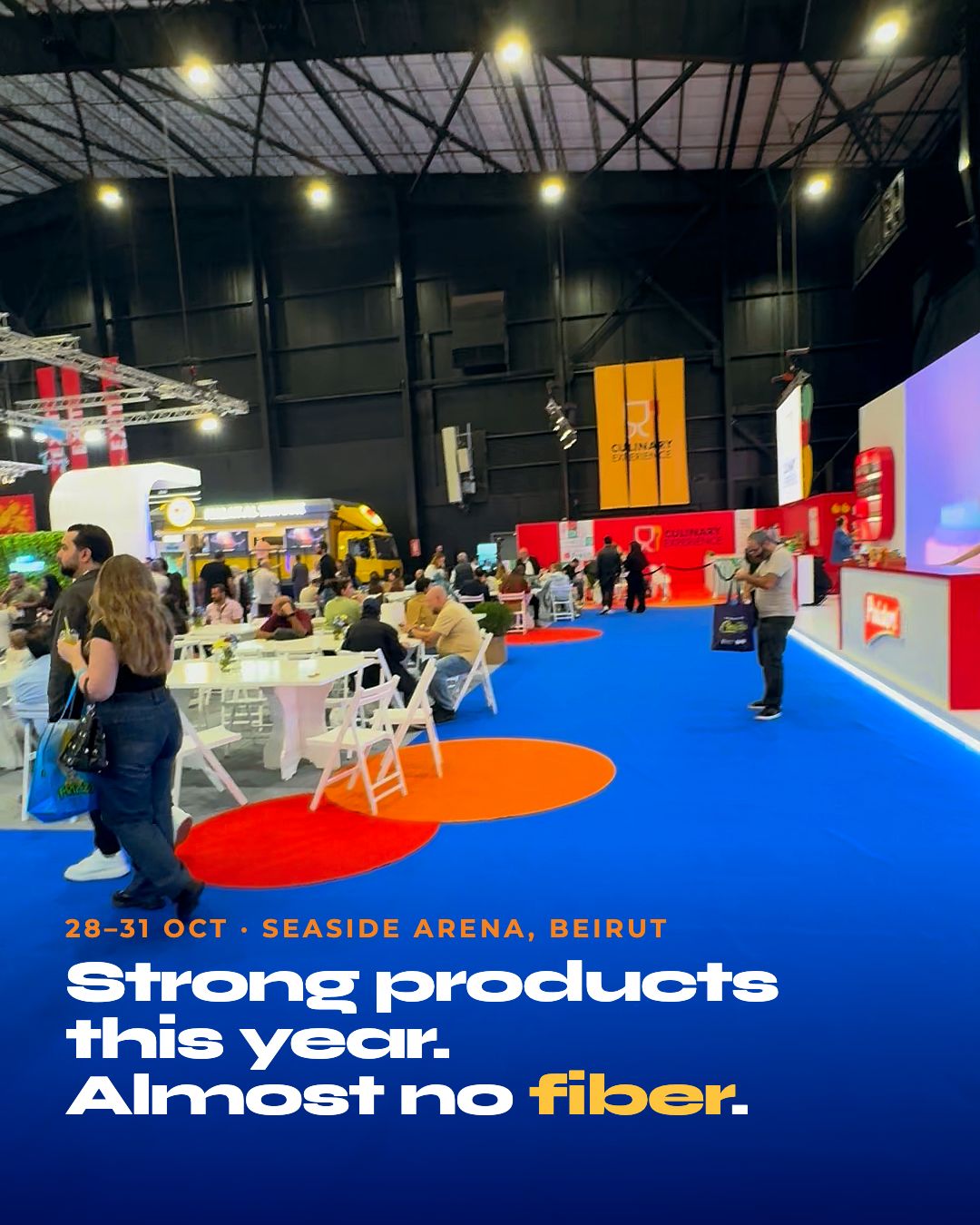
Strong products this year. One clear gap. #
First, credit where it is due: this year some very strong products came out. The range, the packaging and the ambition of Lebanese factories were impressive.
But walking from stand to stand, fiber was almost nowhere. Nobody was leading with it. And the few products that do contain fiber did not put it forward, because its value is not widely understood yet.
Nobody’s focusing on fiber right now. Even those who have it don’t push it.
Protein was the trend. Fiber is next. #
Protein has had its moment, and it is not going away. In my view it will level off: fewer brand-new protein products, more competition on the ones already on the shelf. Right now the attention is on electrolytes and creatine. Next up is fiber.
The global numbers point the same way. Launches carrying both protein and fiber claims grew 15% in a year, and more shoppers read the nutrition panel before they buy.
-
+15%
Launches with both protein and fiber claims, Jul 2025–Jun 2026 vs the year before
Source: Innova Market Insights via FoodIngredientsFirst, 8 Oct 2026
-
59%
Consumers worldwide who read all or most of the nutrition information on packs
Source: Innova Market Insights 2026 packaging survey
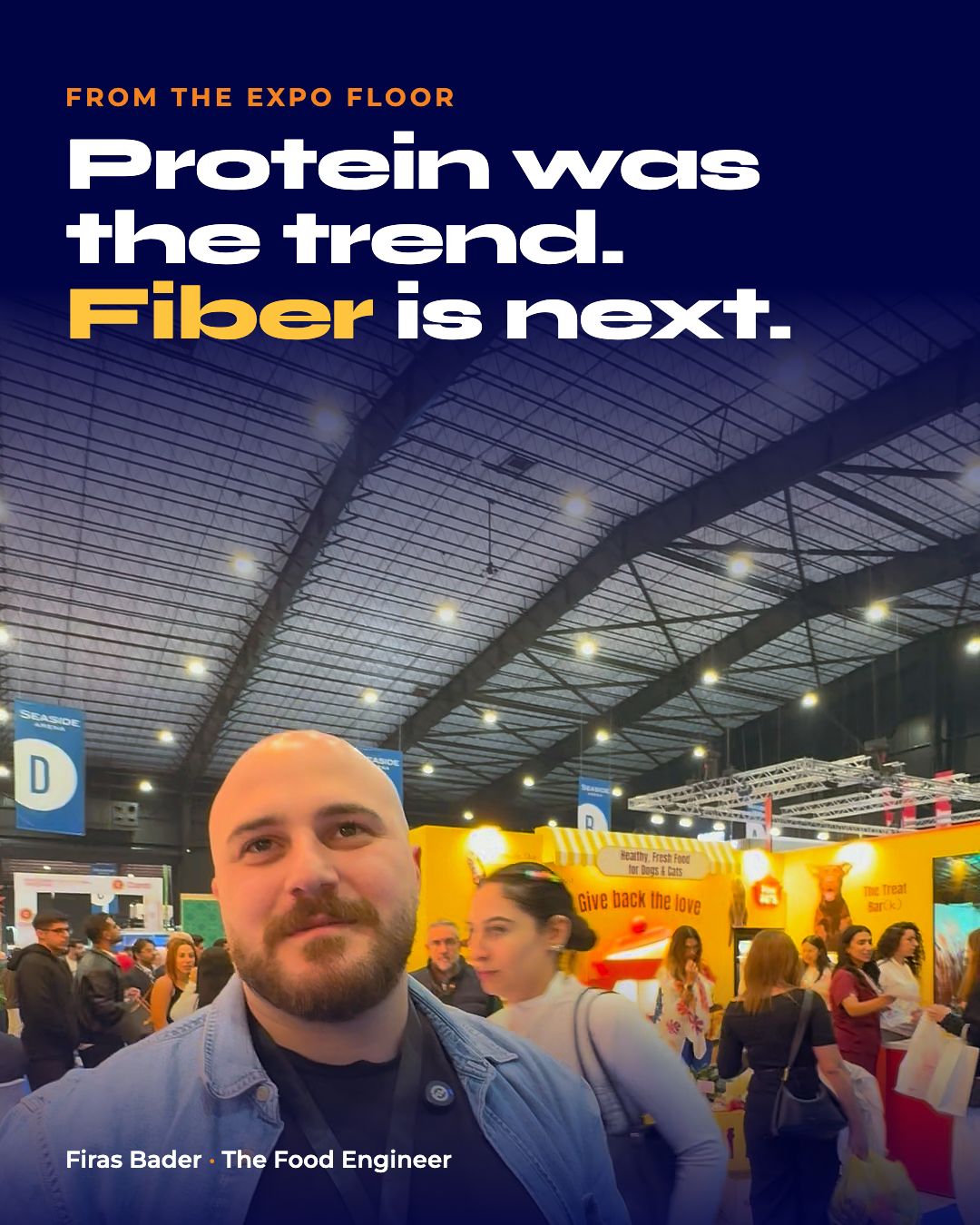
For a Lebanese brand, that is an opening. When almost nobody is making high-fiber, low-sugar products, the first good ones have the shelf, and the customer’s attention, nearly to themselves.
Why fiber is harder than it looks #
Fiber is a family, not one ingredient. Two products can carry the same grams of fiber and behave completely differently. Psyllium, for example, turns a drink into gel. Inulin stays in the drink.
Which fiber, how much, and in which product: each choice changes the result. That is why the fiber decision comes first, before the recipe, not after it.
How to start a high-fiber product #
-
Start from a product people already buy
A bar, a drink, a bread or a chocolate that already sells gives you a clear target for taste and texture. Every change is judged against it.
-
Choose the fiber for the format
A drink, a bar and a bake need different fibers. Choose for the product first, the label second.
-
Add it in steps
Raise the fiber a little at a time, so you can see what each step does to texture and sweetness.
-
Test taste, texture and shelf life together
Taste a fresh sample next to one from the end of its shelf life. Day one alone can fool you.
Before you launch a high-fiber product
Ticks are saved on this device only.
It doesn’t matter that you started a high-fiber product. What matters is how it is made. If you’re planning a high-fiber bar, drink, baked good or chocolate, see how I work on fiber products or tell me what you’re working on.
Sources
Every number here comes from these sources. Read them before you rely on a figure.
Your turn
Which Lebanese product should get more fiber first?
Vote, then see what other readers chose.
Discuss this with Firas
Facing this in your own product? Send me a line on WhatsApp, or tell me about it on the contact page.