Insight 4 min read
Kitchen to factory: what changes when a recipe meets the line
Five things that change between the test kitchen and the factory line, and the three things I’d lock before the first factory trial.
In 30 seconds
- A recipe that works in a test kitchen still has to be re-engineered before it runs on a factory line.
- Five things change at scale: ingredients, water, heat, time and shelf life.
- Before the first factory trial, lock a factory-grade spec, a written process and shelf-life tests on product from the line.
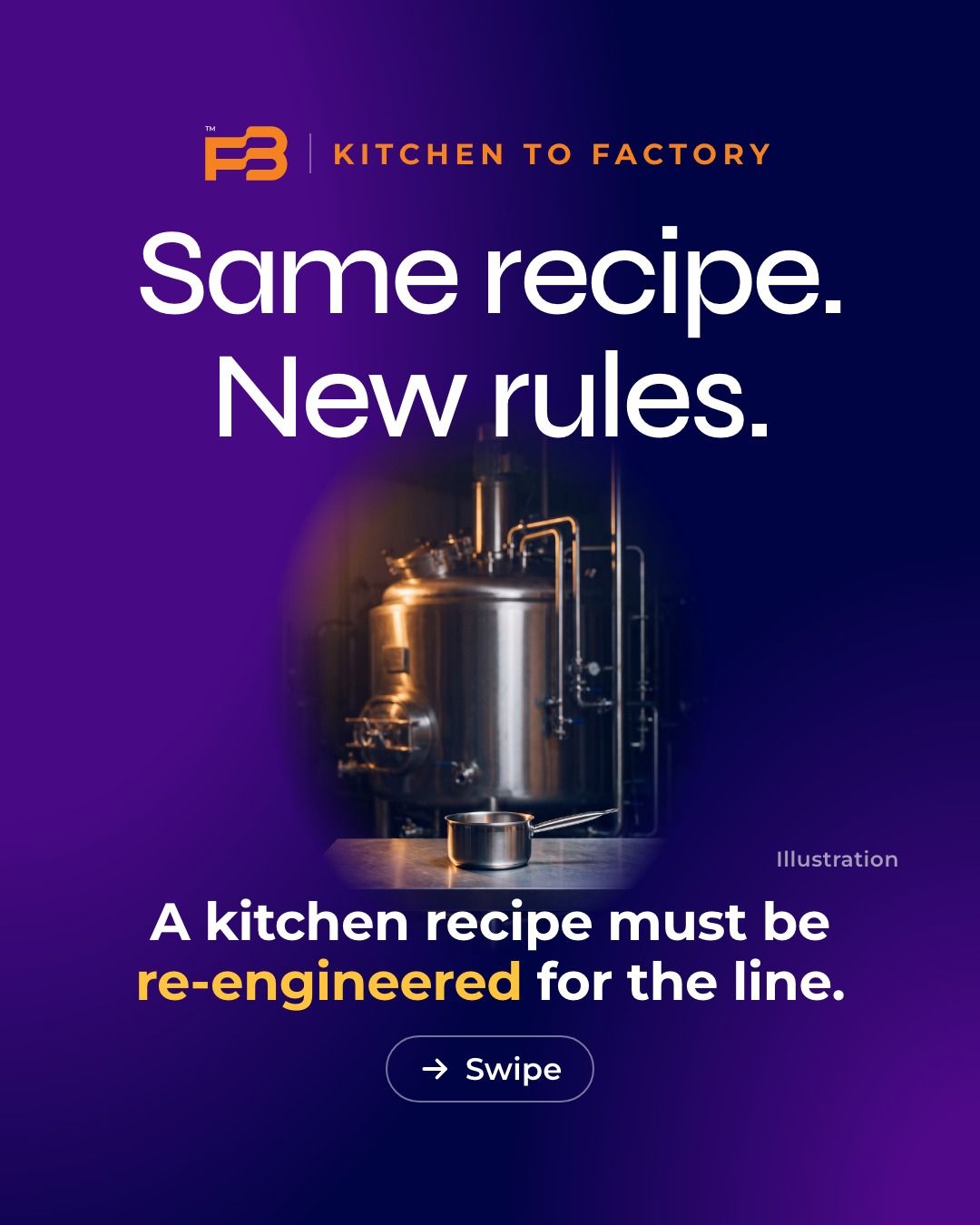
Same recipe, new rules. A recipe that works in a test kitchen still has to be re-engineered before it runs on a factory line.
On the bench, it’s a small batch, one pot, and a cook who tastes and adjusts as they go. On the line, the batch is many times bigger, the line sets the timings, and the ingredients are bought to a spec. Skip the re-engineering, and the first factory batch is where you find out.
More products are making that move in the UAE. In April 2026, Gulf News reported plans for 140 new locally produced food items over that year and the next, including dairy, cheeses, butter and baked goods. Gulfood Manufacturing 2026 (3–5 Nov, Dubai World Trade Centre) chose a theme that fits: Powering Food Security Through Manufacturing Innovation.
-
140
New locally produced food items the UAE plans to introduce over 2026 and 2027
Source: Gulf News, 3 Apr 2026
-
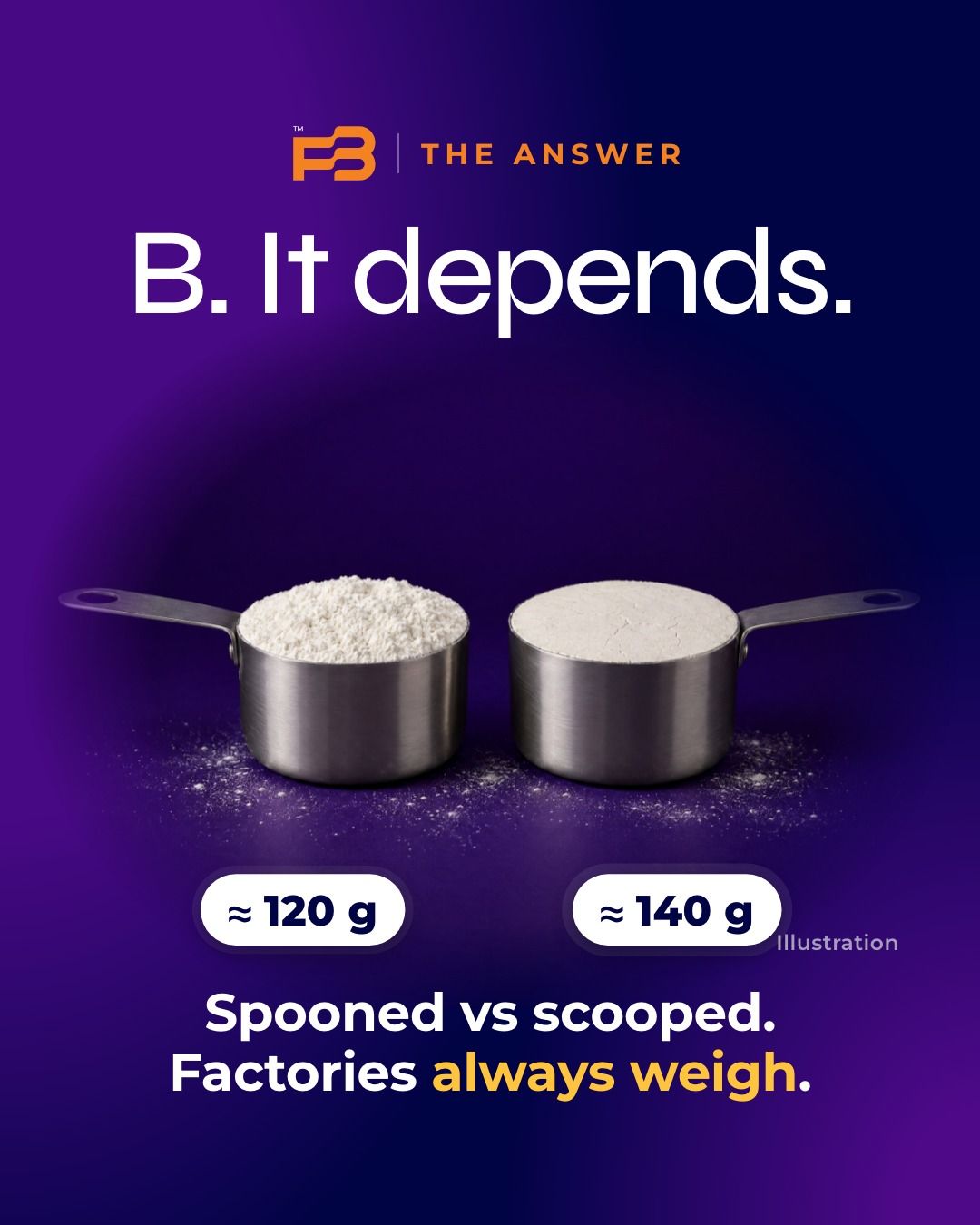
≈ 120 g vs ≈ 140 g
One cup of flour, spooned and levelled vs scooped and packed
Source: King Arthur Baking (120 g); scooped-cup measurements (about 5 oz)
Five things that change between the bench and the line #
Scroll the table sideways to see every column.
| What changes | In the test kitchen | On the factory line |
|---|---|---|
| Ingredients | What you bought for the trial | Bought to a spec, often from a different supplier |
| Water | The water you trialled with | Local water, with its own minerals |
| Heat | A pot heats and cools fast | A big batch heats and cools far slower |
| Time | You decide when it’s ready | The line sets mixing, coating and resting times |
| Shelf life | A week on the bench | Months in a warehouse |
Source: General food engineering, no figures.

Ingredients. The factory buys to a spec, often from a different supplier. A protein, a fibre or an oil with the same name can behave differently from one supplier to the next, so the spec has to say how the ingredient must behave in your product.
Measures. Kitchens measure in cups; factories weigh. One cup of flour is about 120 g when it is spooned in and levelled, and closer to 140 g when it is scooped and packed. The same recipe, measured two ways, is already two products.
Water. Local water brings its own minerals, and minerals can react with what is in your product. The factory’s water is checked for what it brings before the first trial, not after the first problem.
Heat and time. A big batch heats and cools far slower than a pot, and the line sets mixing, coating and resting times. A sauce that thickens in minutes in a small pot, for example, can behave differently in a large kettle that heats and cools slowly, so anything that depends on heating, cooling or resting is checked again at full size.
Shelf life. A week on the bench says little about months in a warehouse. Shelf life has to be judged on product made the factory way, from the trial run. I explain how to start in Shelf life by design.
No factory of your own? No problem #
I have no factory of my own, and you don’t need one either. I write the factory process, every step in order with what to check at each one, and I support the trials with your manufacturer.
My name isn’t on the pack. My work is inside.
Before your first factory trial, lock three things #
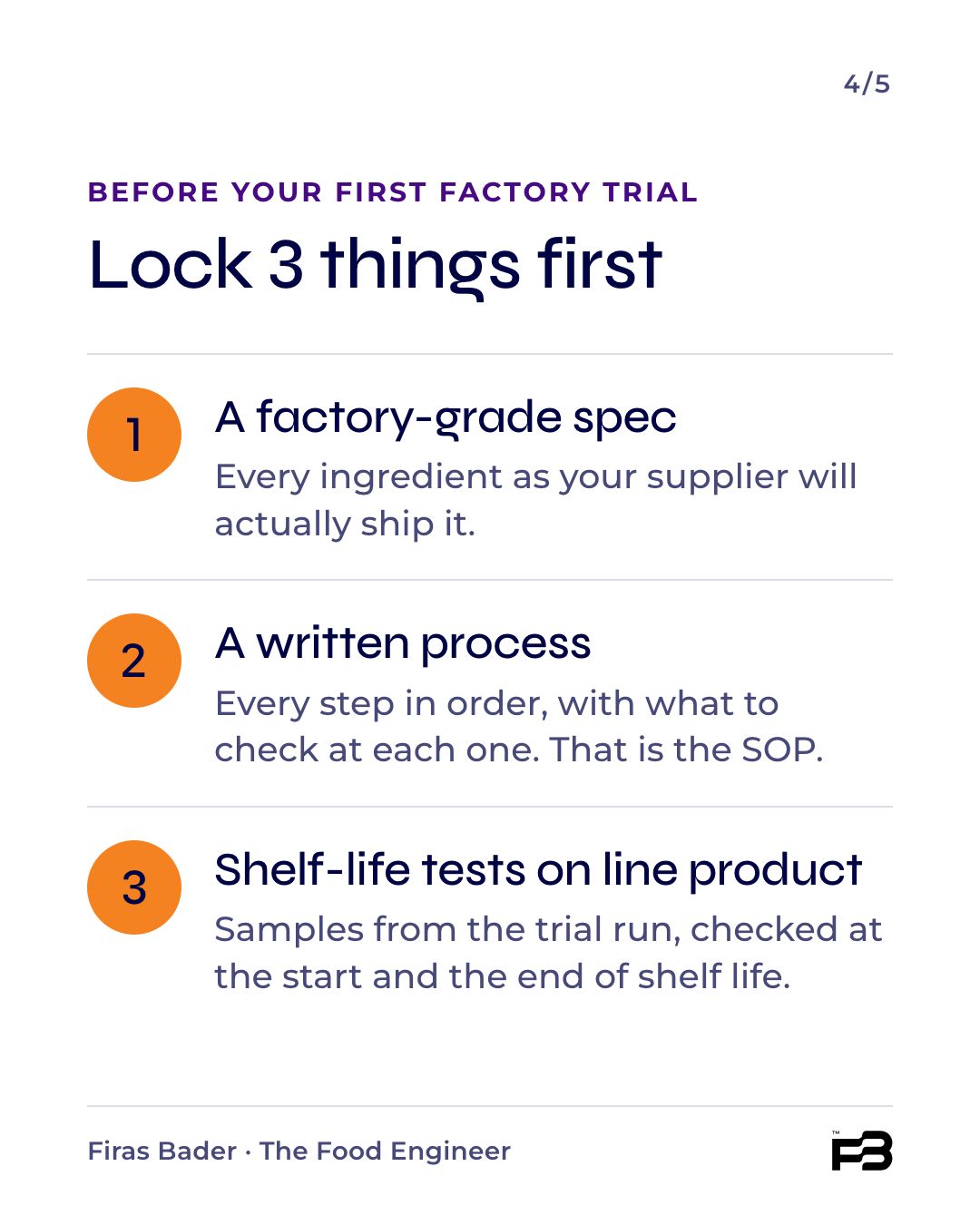
A spec, a written process and samples from the line can sound like paperwork. They are what lets you trace a problem on the line back to its cause: a different ingredient, a different step, or a different time and temperature.
Your factory-trial checklist
Ticks are saved on this device only.
Where to start with your manufacturer #
If your product works in the kitchen and is heading to a co-packer or your own line, start with the spec and the written process. Then plan the trial with your manufacturer, and take shelf-life samples from that run.
If you’re moving a product to a factory, happy to compare notes. Send me a short, non-confidential overview: what the product is, where you are now and what you want to change.
Sources
Every number here comes from these sources. Read them before you rely on a figure.
- Gulfood Manufacturing 2026, 3–5 Nov, Dubai World Trade Centre (official site) (opens in a new tab) ·
- Gulf News: UAE scales up food production with 140 new products in pipeline (opens in a new tab) ·
- King Arthur Baking: Ingredient weight chart (1 cup all-purpose flour = 120 g) (opens in a new tab) ·
- Mental Floss: How to measure flour (scooping and tapping gives about 5 ounces a cup) (opens in a new tab) ·
Your turn
What broke first when your product moved from kitchen to factory?
Vote, then see what other readers chose.
Discuss this with Firas
Facing this in your own product? Send me a line on WhatsApp, or tell me about it on the contact page.