Insight 4 min read
Shelf life by design: start with what fails first
Every food fails. The question is what fails first: texture, taste, colour or safety. The answer decides the formula, the process and the pack.
In 30 seconds
- Ask on day one what ends your product’s life first: texture, taste, colour or safety.
- Each one has its own cause: water from the air softens crunch, oxygen turns oil rancid, air browns cut fruit, and microbes need free water.
- Name the failure, design against it, then test that exact failure at the end of shelf life.
Shelf life usually gets discussed as a number on the pack: six months, nine months, a year. I start somewhere else. Every shelf-life plan I write begins with one question: what fails first?
A product rarely fails all at once. One thing goes before everything else: the crunch softens, the oil turns rancid, the colour changes, or it stops being safe. Whatever goes first sets the real shelf life.
Name that weak point early and it shapes the formula, the process and the pack. Find it late and you are patching a product that is already on the shelf.
Texture: the crunch goes soft #
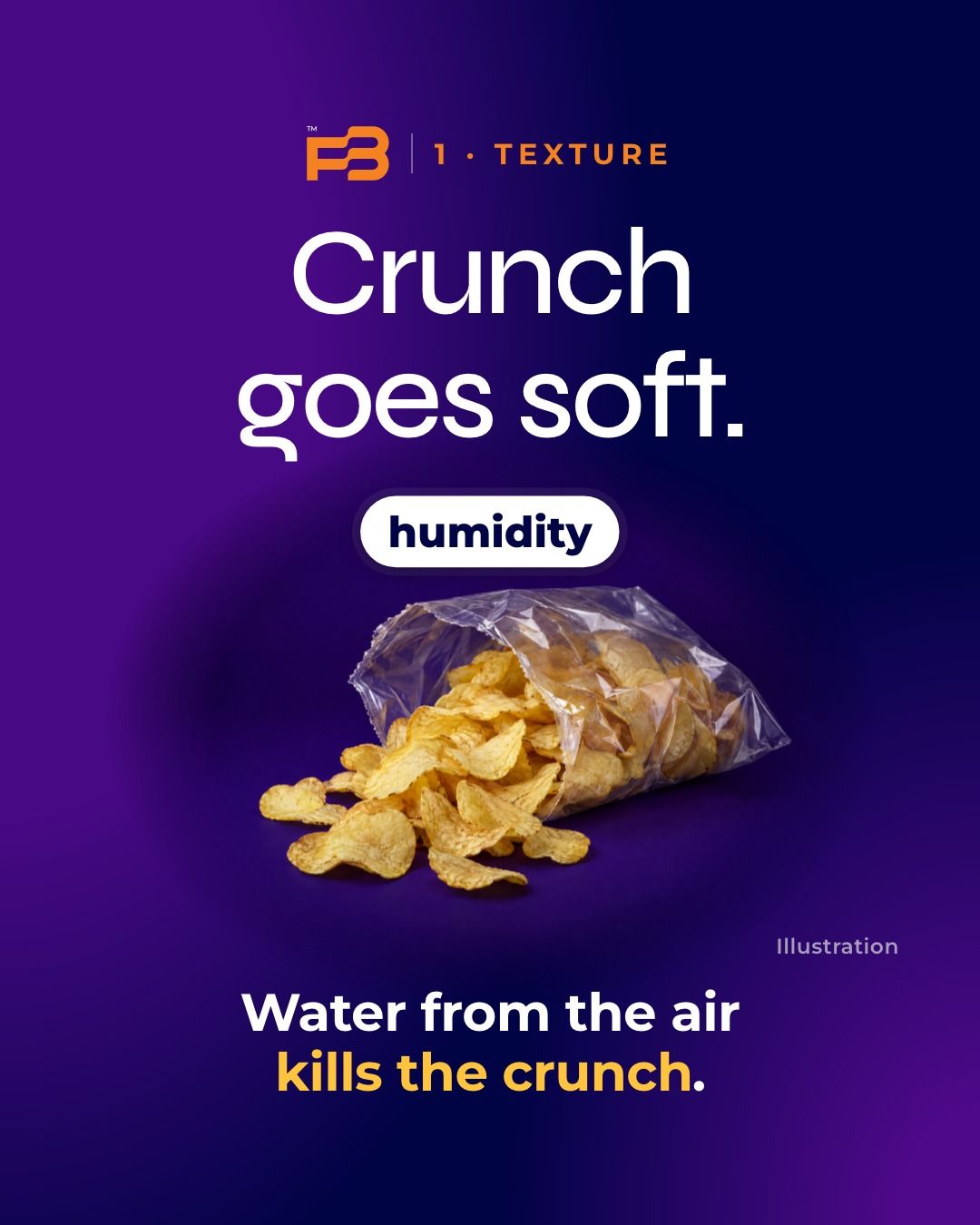
Chips, crackers and popcorn are crisp because they are very dry. Leave them open and they take up water from the air. A classic study measured it: snacks lose their crispness once their water activity rises past a critical point, roughly 0.35 to 0.5 depending on the product.
So for a crunchy product, the design question is how to keep water out: a dry finished product, and a pack that blocks moisture for the whole shelf life, including after the first opening.
Taste: the oil turns rancid #
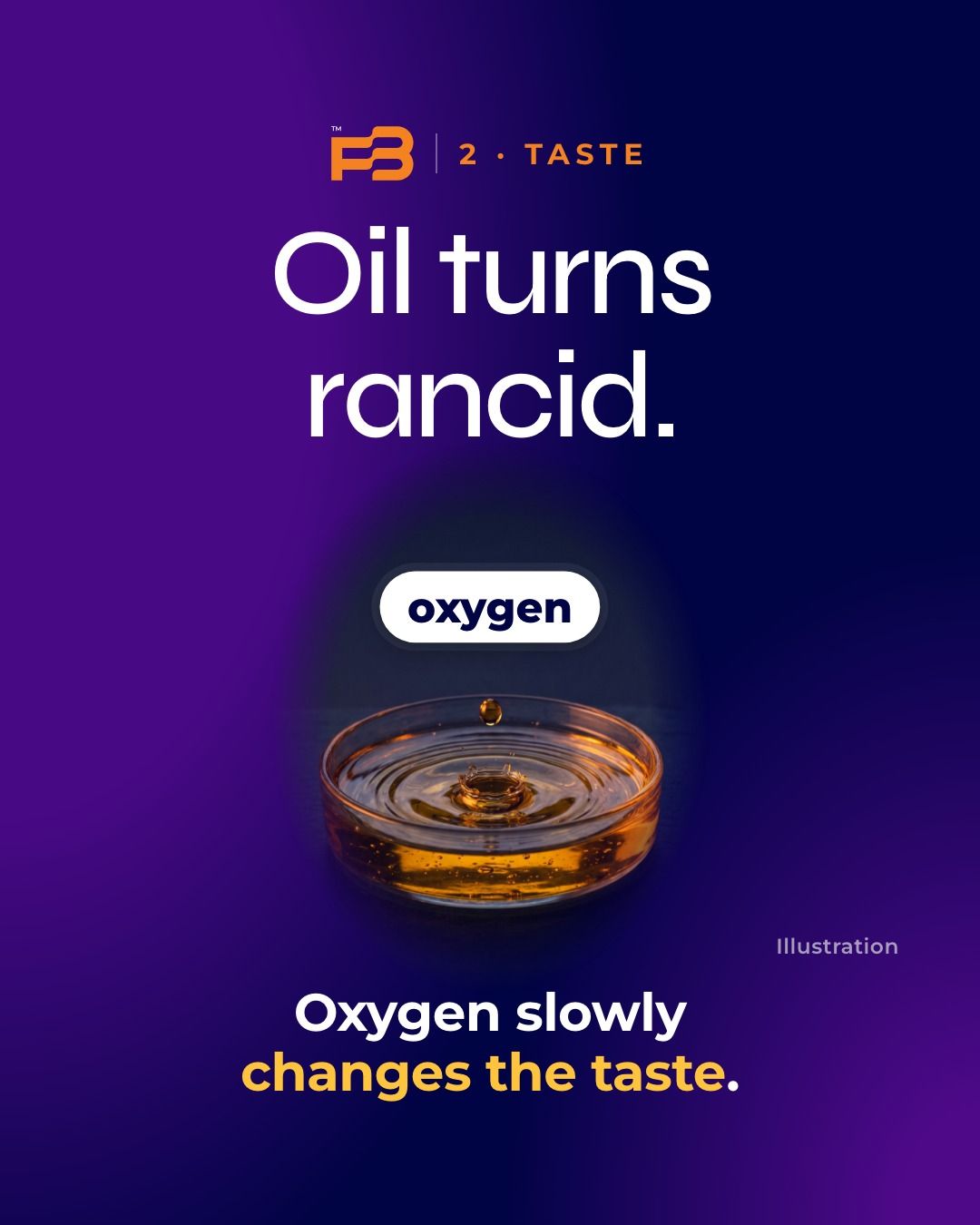
In anything with oil, oxygen slowly reacts with the fat. The product can look perfect and still taste stale or rancid. That is why many snack bags are filled with nitrogen instead of air: nitrogen does not react with the oil.
Colour: it browns or fades #
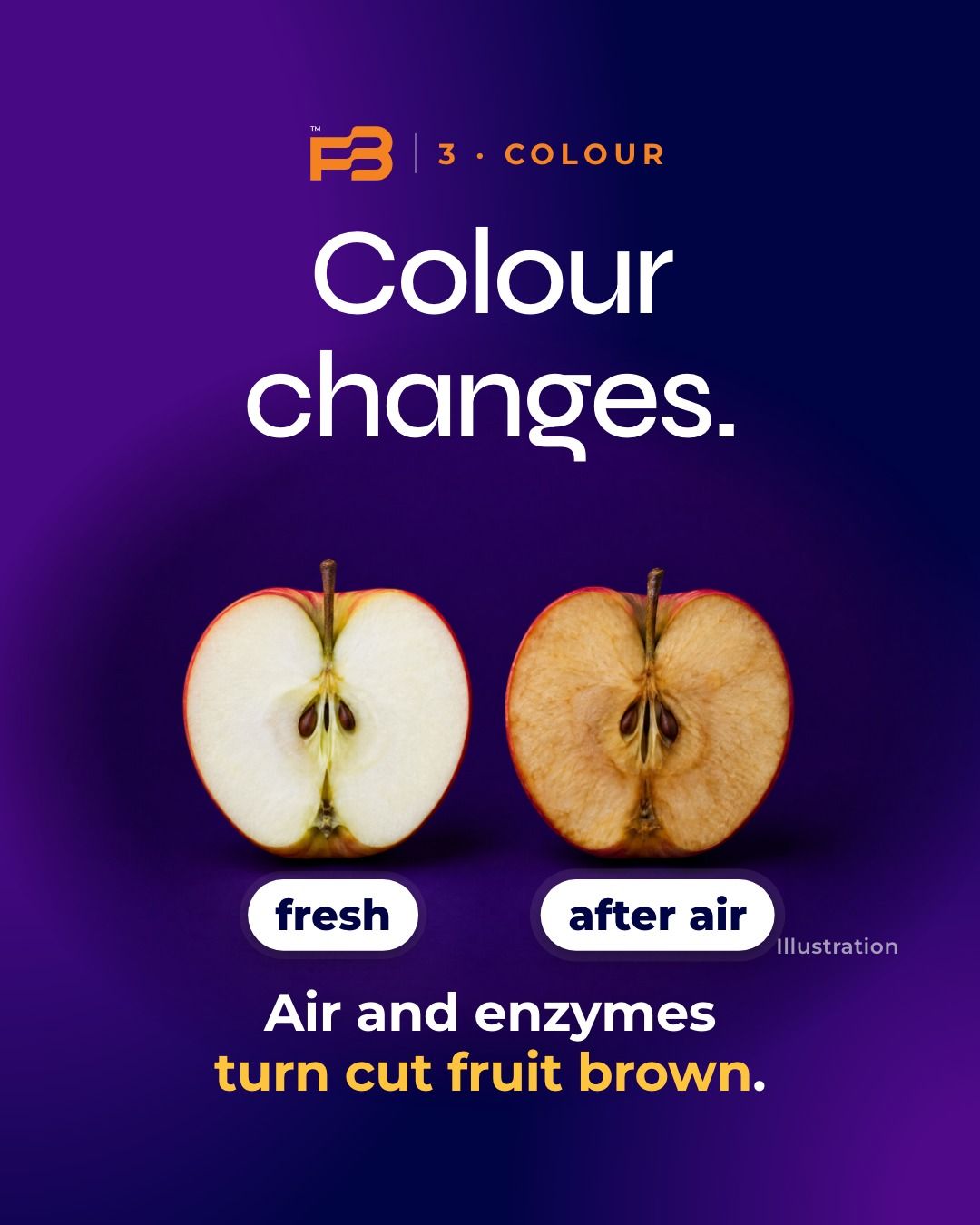
Cut an apple and leave it out. Cutting lets an enzyme in the fruit meet the oxygen in the air, and the flesh turns brown. Colour is often the first thing a shopper notices, so for some products it is the failure that ends shelf life, even when taste and safety are fine.
Safety: microbes need water #
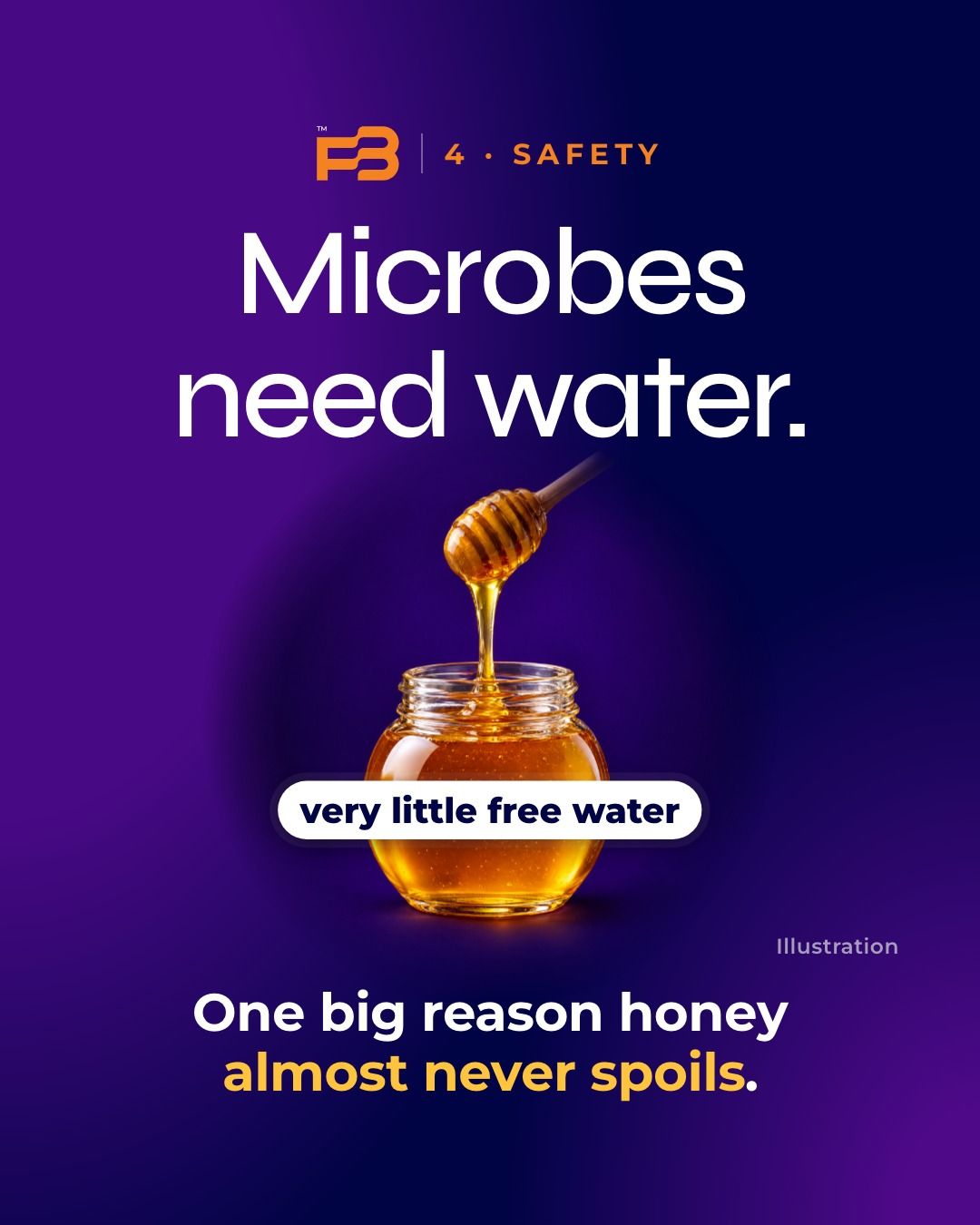
Microbes do not need just water: they need free water, measured as water activity. Honey holds very little of it, which is one big reason it almost never spoils; its acidity helps too.
Food regulators use the same idea. The US FDA notes that when water activity is kept at 0.85 or below, disease-causing bacteria cannot grow, although some yeasts and moulds still can. Controlling water is one of the main tools in shelf-life design.
-
0.35–0.5
Water activity at which crisp snacks lose their crunch
Source: Katz & Labuza, Journal of Food Science, 1981
-
≤ 0.85
Water activity at which disease-causing bacteria cannot grow (yeasts and moulds still can)
Source: US FDA, Water Activity (aw) in Foods
Build it in from day one #
-
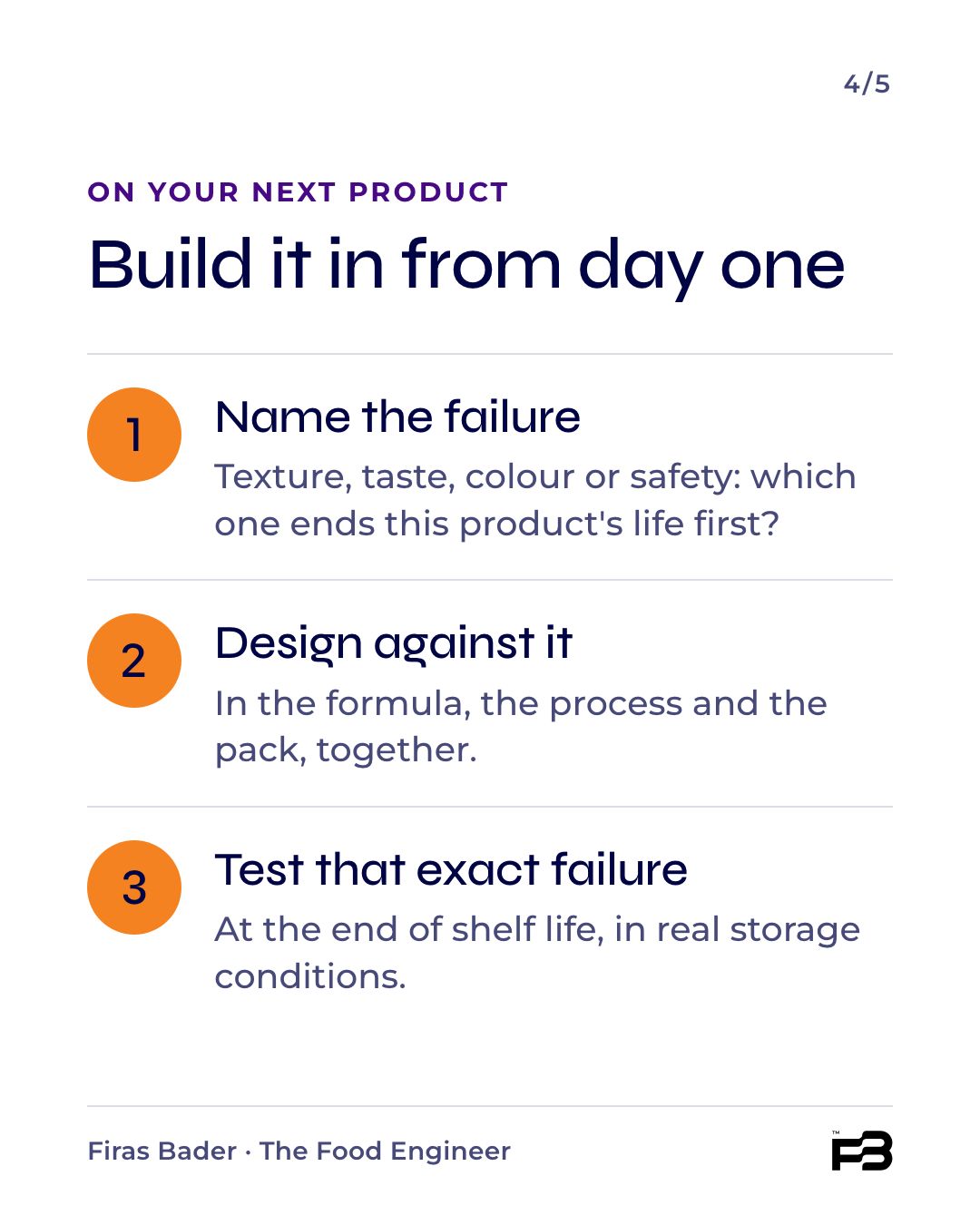
Name the failure
Texture, taste, colour or safety: which one ends this product’s life first? Write it into the brief before the first trial.
-
Design against it
In the formula, the process and the pack, together. A fix in one place can be undone by the other two.
-
Test that exact failure
At the end of shelf life, in real storage conditions. Measure the thing you named in step 1, on the last day.
Your shelf-life brief
Ticks are saved on this device only.
Your first step #
Take your best-selling product and ask the question out loud with your team: what fails first? If the answers differ around the table, that is your first finding.
Shelf life isn’t luck. It’s designed. If shelf life is the weak point in your product, tell me about it and we can talk it through.
Sources
Every number here comes from these sources. Read them before you rely on a figure.
- Katz & Labuza, Effect of water activity on the sensory crispness and mechanical deformation of snack food products, Journal of Food Science 46, 403–409 (1981) (opens in a new tab) ·
- Centre for Food Safety, Hong Kong: Food Safety Focus, issue 177 (why snack bags are filled with nitrogen) (opens in a new tab) ·
- Marasca, Greetham, Herring & Fisk, Impact of nitrogen flushing and oil choice on the progression of lipid oxidation in unwashed fried sliced potato crisps, Food Chemistry 199, 81–86 (2016) (opens in a new tab) ·
- University of Wisconsin–Madison: Why do apple slices turn brown? (opens in a new tab) ·
- US FDA: Water Activity (aw) in Foods, inspection technical guide (opens in a new tab) ·
- Review: honey's antimicrobial properties (low water activity, acidity and other compounds) (opens in a new tab) ·
- Asharq Al-Awsat: Lebanese exports to Saudi Arabia resume as first containers head to Jeddah (opens in a new tab) ·
Your turn
What fails first in your product?
Vote, then see what other readers chose.
Discuss this with Firas
Facing this in your own product? Send me a line on WhatsApp, or tell me about it on the contact page.