Insight 4 min read
Protein and fibre in one food: why texture breaks first
Innova’s #1 food trend for 2027 is more nutrition per bite. Why protein and fibre fight over the same water, and how to add both without losing the product.
In 30 seconds
- More nutrition per bite is Innova’s #1 food trend for 2027; launches with both protein and fibre claims are up 15%.
- In one recipe, protein and fibre compete for the same water, so texture is usually what breaks first.
- Add them in steps, start from a product people already like, and test taste, texture and shelf life together.
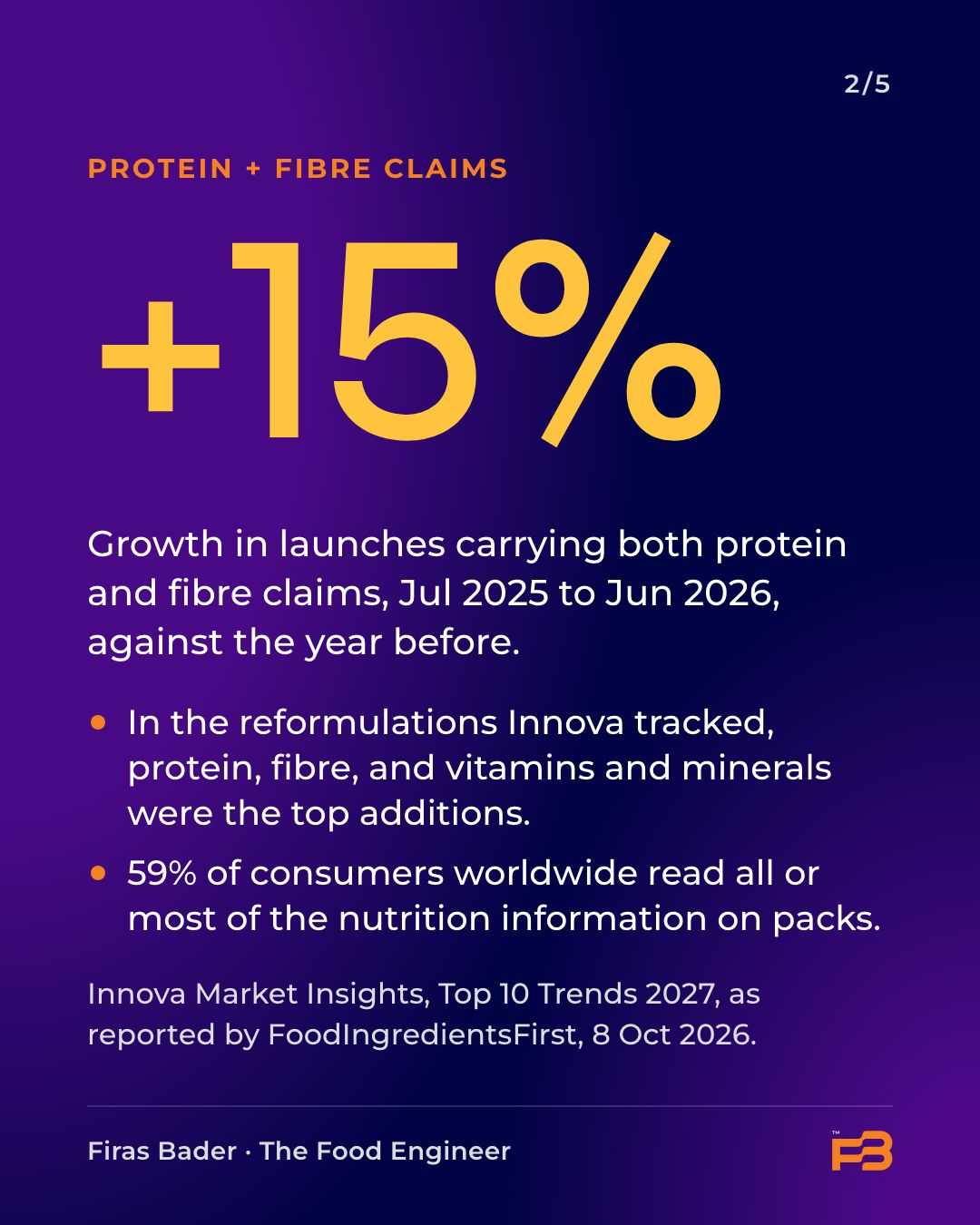
Launches carrying both protein and fibre claims grew 15% in a year, from July 2025 to June 2026. Innova Market Insights’ #1 food trend for 2027, Nutrient Density Design, points the same way: more nutrition per bite, in the foods people already eat.
I like this trend, because it asks brands to add something good to products people already buy. The catch is water. Protein and fibre both need it, and a recipe only has so much to share.
The numbers: protein and fibre are moving together #
In the reformulations Innova tracked over that same year, protein, fibre, and vitamins and minerals were the top additions. Shoppers are looking for it: 36% of consumers worldwide actively seek high-quality protein, and 59% read all or most of the nutrition information on packs, with sugar drawing the most attention, followed by protein and fat.
Innova’s reading is that cutting sugar or fat alone no longer defines a better product. Brands are reworking familiar foods to strengthen their nutrition.
-
+15%
Launches with both protein and fibre claims, Jul 2025–Jun 2026 vs the year before
Source: Innova Market Insights via FoodIngredientsFirst, 8 Oct 2026
-
36%
Consumers worldwide who actively seek high-quality protein
Source: Innova Market Insights via FoodNavigator, 13 Oct 2026
-
59%
Consumers who read all or most of the nutrition information on packs
Source: Innova Market Insights 2026 packaging survey
Why protein and fibre fight over the same water #
In a recipe, the two compete for the same water.
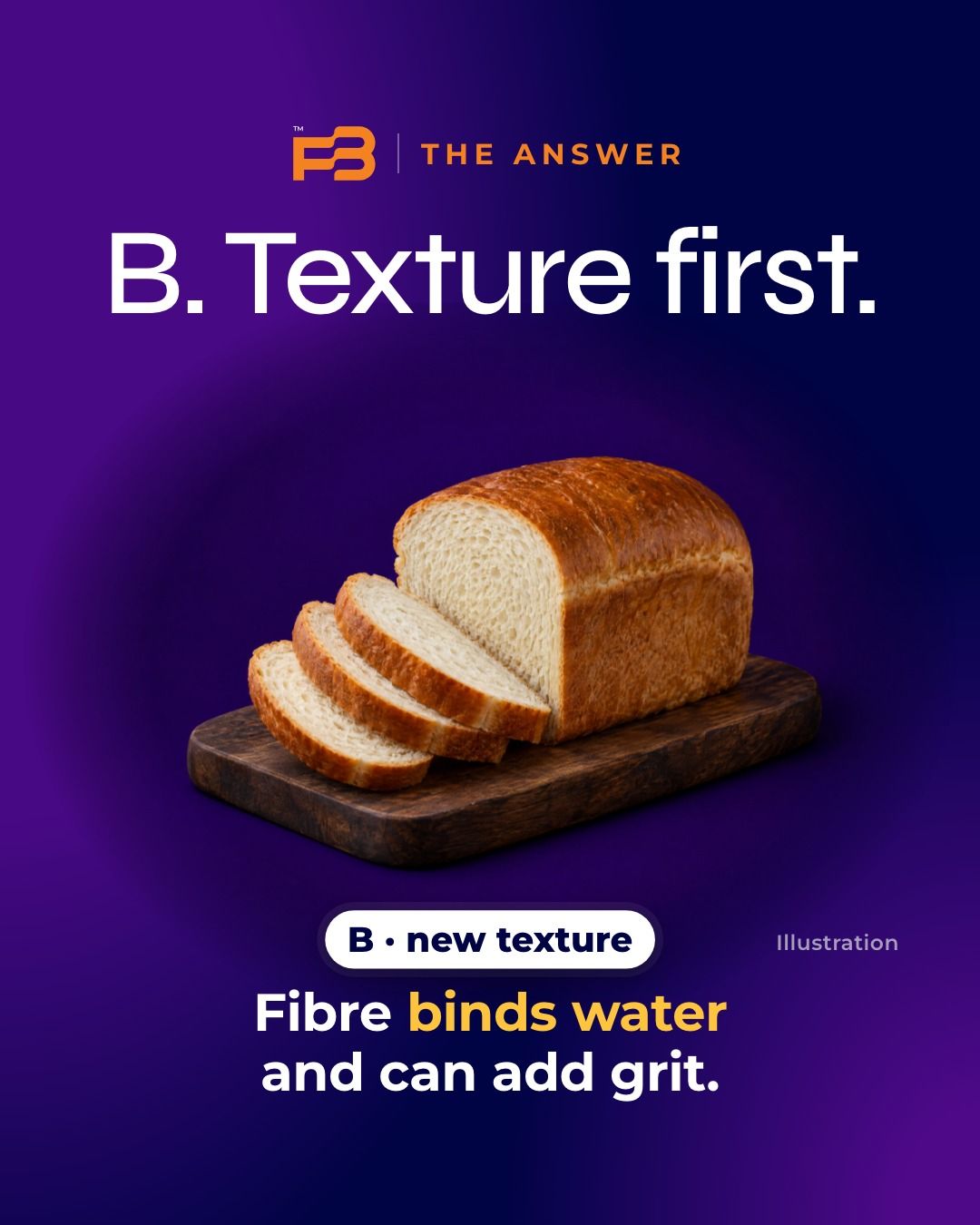
Fibre binds water, can add grit and changes how sweet a product tastes. Studies on fibre-enriched bread show it: the dough takes up more water, and the crumb can turn firmer and less soft. Protein thickens drinks and takes water from bars and bakes.
Water is what makes a bar soft, a bread tender and a drink easy to pour. When fibre holds on to part of it and protein claims more, there’s less left for everything else. The product can turn dense, dry or gritty, even when the nutrition panel looks perfect.
How to add protein and fibre without losing the product #
There’s no single trick here. What works is a way of working, and it starts from a product people already like.
-
Start from a product people already like
A bread, laban, snack or drink that already sells gives you a clear target for taste and texture. Every change is judged against it.
-
Add in steps
Raise protein and fibre a little at a time, so you can see which addition moved the texture.
-
Give the water back its balance
When protein and fibre take water, the rest of the recipe has to be adjusted so the product keeps its bite, softness or flow.
-
Test taste, texture and shelf life together
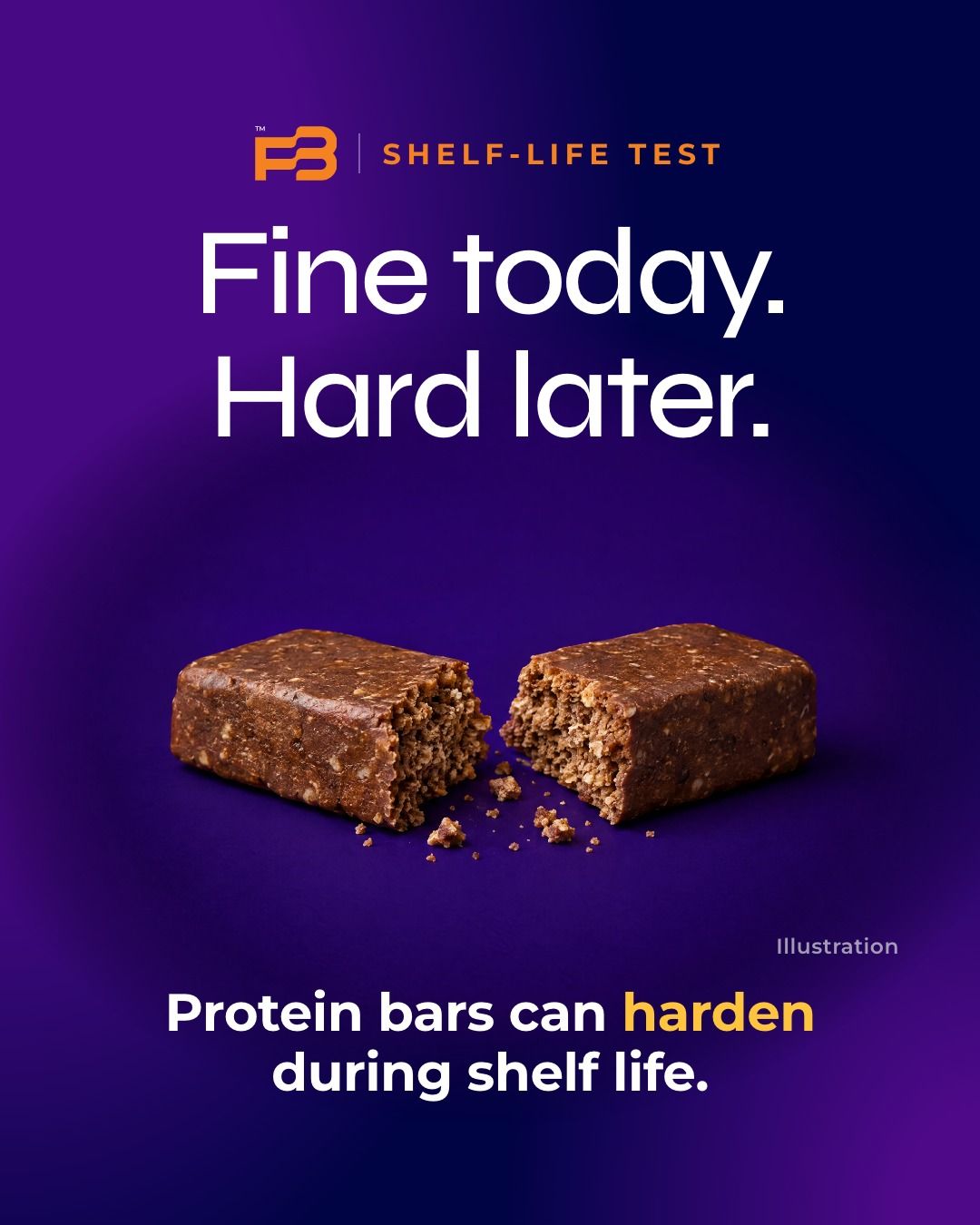
Check the fresh product and the product at the end of its shelf life. Day one alone can fool you.
One product, one target #
If protein and fibre are on your 2027 list, pick one product you already sell and one clear target. Then run through this list before the first trial.
Before you add protein and fibre to a product
Ticks are saved on this device only.
More nutrition per bite is the goal; keeping the taste and texture is the work. If you’re adding protein or fibre to a product, tell me what you’re working on.
Sources
Every number here comes from these sources. Read them before you rely on a figure.
- FoodIngredientsFirst: Innova Market Insights’ top 2027 F&B trends (nutrient density, protein quality and metabolic health) (opens in a new tab) ·
- Innova Market Insights: Top 10 Trends for 2027 (press release) (opens in a new tab) ·
- FoodNavigator: The 10 food and beverage trends set to shape 2027 (opens in a new tab) ·
- Review: technological evaluation of fibre effects in wheat-based dough and bread (2024) (opens in a new tab) ·
- McMahon, Adams & McManus: Hardening of high protein nutrition bars and sugar/polyol-protein phase separation, Journal of Food Science 74 (2009) (opens in a new tab) ·
- Loveday et al.: Physicochemical changes in a model protein bar during storage, Food Research International 42 (2009) (opens in a new tab) ·
Your turn
Which everyday food should get protein and fibre first?
Vote, then see what other readers chose.
Discuss this with Firas
Facing this in your own product? Send me a line on WhatsApp, or tell me about it on the contact page.